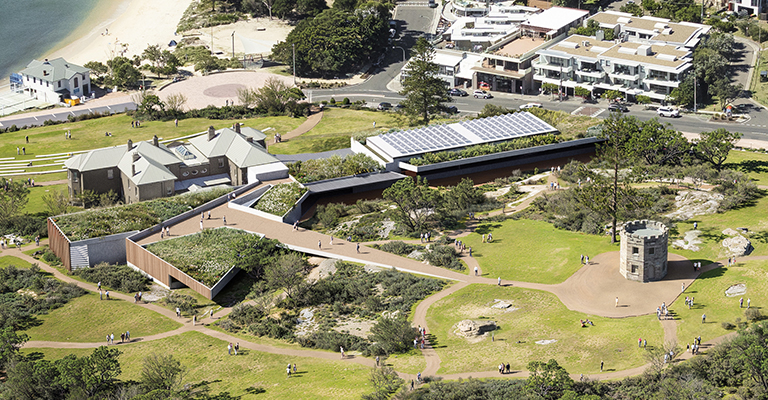
The future of La Perouse Museum?
What should the future La Perouse Museum and First Nations Cultural Precinct look like? Drawing on Kamay’s layered histories, I argue for an Indigenous-led masterplan: a purpose-built cultural centre, immersive trails across sea and headland, reimagined use of the historic building, and funding models that prioritise truth-telling and visitor experience. (10 min read)
Randwick Council is inviting feedback on a draft strategic plan for La Perouse Museum by 9 September 2026.
The draft plan proposes the priorities for the Museum for the next 4 years. The 5 key areas of support identified by Council are:
- First Nations – working in partnership with the La Perouse Aboriginal Community to host their many stories and histories and showcase First Nations practitioners and exhibitions.
- Exhibitions – delivering an exciting annual exhibition program that reflects the layered histories of La Perouse.
- Public Programs – activating the headland through engagement with local creative practitioners and educators.
- Collections – continuing to care for the State Collection while developing and refining Council’s Museum collection.
- Education – offering meaningful learning experiences for schools and tertiary institutions and promoting education initiatives throughout the Museum.
My submission on the draft strategic plan for La Perouse Museum
While key areas and proposed actions in the draft plan are not unreasonable, it would be sensible to revisit prioritisation so that resources are available for the main game.
This submission principally concerns the approach to the First Nations Cultural Precinct, including a much broader conceptualisation of the precinct (to align with visitor needs rather than institutional boundaries).
The draft strategic plan alludes to evolving the site of the La Perouse Museum into a First Nations Cultural Precinct and the proposed actions seem align with this but there is an implication that the future is uncertain.
The highest priority should be directly progressing the cultural centre and shifting museum operations quickly in anticipation of that being delivered. I encourage Council to consider detailed precinct planning in tandem with cost cutting and revenue generating strategies and partnerships.
Australia deserves a museum with an solely Indigenous voice, anchored in “contact” on the shores of Kamay (Botany Bay) but focused on 65,000 years of Aboriginal history and culture and the consequences of British invasion and later Government policy. A spirit of openness to the non-binary approach to history practised by Maria Nugent in her book on Botany Bay should be a matter for Indigenous curators to consider as they frame and enliven the museum’s master narrative. Supporting Indigenous Australians to deliver this museum would enable truth-telling, facilitate reconciliation and deliver various other benefits, including affirming identity and fulfilling cultural responsibilities to care for sea country. For maximum impact, the museum should focus on the theme of Indigenous history and culture alone while offering complementary visitor experiences on other themes outside the museum. This does not rule out exhibits about the museum building or exploring the common interest in botany amongst Aboriginal people, the English and the French but the perspective should be an Indigenous one not mimicry of the conventional, institutional voice of government museums.
Australia needs different voices to understand the past and solve contemporary problems (especially related to culture, equity and the natural environment) and this museum could fulfil some of the promise of The Voice to Parliament. Just as it is now is self-evident that unfettered Aboriginal art making led to the last great art movement of the 20th century, unfettered Indigenous scholarship is driving the rewriting Australian history with global implications. It is timely to create an unfettered First National Cultural Precinct led by local Aboriginal people.
I recommend the Randwick Council develop a strategy to deliver a Precinct Masterplan, including a First Nations Cultural Centre and historical trails with best practice interpretation and deep engagement with projects to care for sea country, rather than this strategic plan. The Museum should have an operational plan to implement the Masterplan.
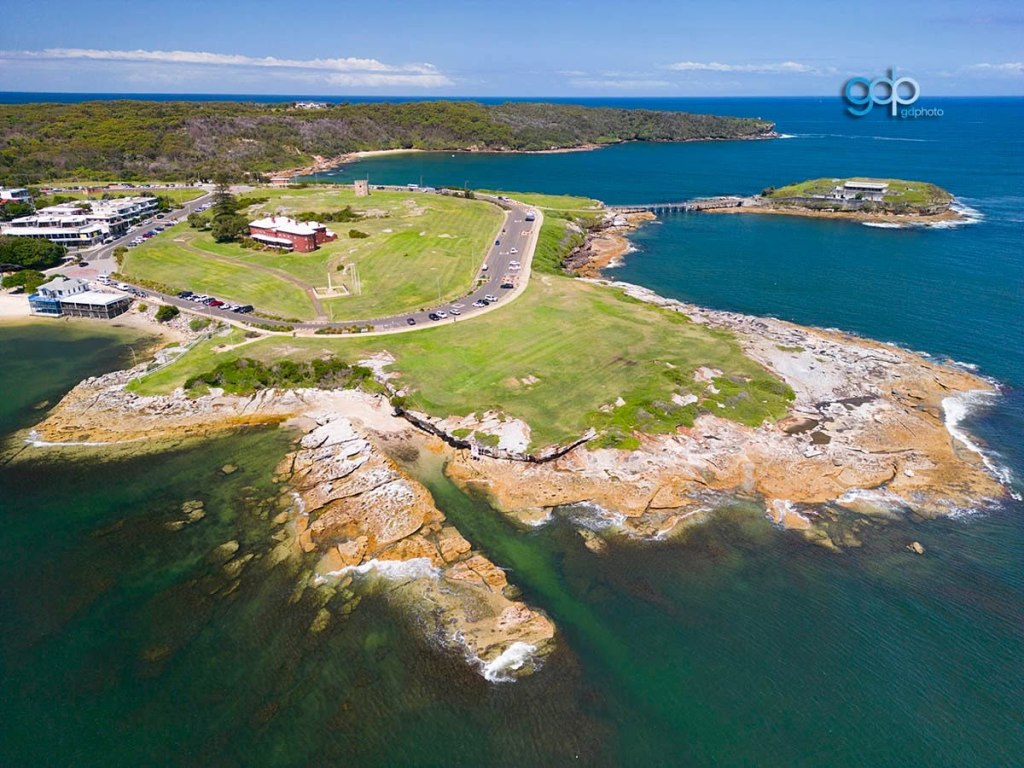
Given the historical importance of Kamay/Botany Bay to all Australians, the unique experience and resilience of the La Perouse Aboriginal Community and the broader historical themes that could be illuminated by the history of this area, the “precinct” should be physically defined as the entire Kamay Botany Bay National Park (ie La Perouse and Kurnell sides and ferry link), the headland surrounding the museum (including the museum, tower and monuments), the public walk way along the Gooriwal Cultural Landscape, Frenchman’s Bay Reserve and the Yarra Bay Bicentennial Park, the Botany Cemetery and potentially the Dharawal Resting Place in the old Coast Hospital Cemetery. The First Nations Cultural Centre and the Kurnell Visitor Centre should be the anchors of the precinct, complemented by artworks, monuments, signage and events.
Importantly, the conceptual boundaries of the precinct should extend to Kamay before the invasion as this is the foundation for what has followed and an issue of great interest to Australians and visitors and links to the vitally important work underway to care for Sea Country. I yearn to understand what Kamay was like before the British arrived and believe the exploration of this issue is urgent. To this end, someone like Brett Leavy (Bilbie Pty Ltd) should be consulted early in the master planning process (see an example of his work here: Brett Leavy – Warrane (Sydney Cove) and recent overview of Brett’s work here: Brett Leavy – Visualising Ancestral Futures).
Historical buildings around the world are often transformed into museums and they are rarely fully successful or cost effective. A new, purpose-built facility would deliver a better museum visitor experience and provide better conditions for the collection. However, historical buildings such as the La Perouse Museum are ideal for complementary visitor services (such as object-free immersive experiences, teaching spaces, meeting spaces, retail and food and beverage), as well as collection storage and office accommodation. The public realm adjacent to a museum and the broader precinct is just as important as the inside of a museum and can be more effective in enlivening site specific stories through artworks, monuments, signage, tours and events.
The masterplan must include cohesive, world class walking trails with interpretations to showcase, if appropriate, Indigenous cultural and historical stories (perhaps including creation stories, ecology, kinship, law/lore, enduring Aboriginal presence, movement of Aboriginal peoples, State regulation of Aboriginal people, missions, political activism, land and sea rights and native title and caring for sea country) and the broader precinct stories (such as the “first fleet” landing point and contact, French contact including La Perouse, Pere Receveur’s tomb and burials of note in Botany Cemetery, uses of the Museum building for the Cable Station and by the Salvation Army and Coast Hospital, the history of Bare Island, Macquarie Watchtower, “Happy Valley” and great depression, Yarra Bay recreation and land use/development conflicts, Port Botany and adjacent industrial development).
An audience led approach to the museum, walking trails, tours and events is essential. An early investment in understanding audience interests and engagement preferences will deliver better results in the long run. The bulk of operating funds should be spent on public facing experiences of the highest quality rather than collection acquisition, management and frequent exhibition turnover and administration.
Given the significant whole of life cost of collection items, it would be ideal for La Perouse Museum to transfer all but the most essential items to other public museums and to borrow exhibitions and objects for temporary exhibitions. The Council’s superb history team should be enhanced to provide the research and advisory service to the museum and it would be optimal to enter into partnerships with universities with Indigenous academics to ensure collection objects are informed by Indigenous cultural knowledge.
In my opinion, the best museums offer brilliant tours (guides are generally volunteers supported by paid trainers and coordinators) which bring to life an outstanding but small permanent collection (exceptional, well-labelled objects aligned to mission and values) and infrequent but compelling temporary exhibitions (mainly touring exhibitions on loan), supported by immersive experiences (including festival and events), and high quality online information for the public and educators. It is important to minimise collection and administration costs and off-set operating costs through partnerships (with other museums, libraries, universities) and self-generated revenue (including retail, venue hire, sponsorships and donations).
The key audiences for this museum, walking trails, tours and events are expected to be Indigenous Australians; school students; employees of organisations with Reconciliation Action Plans; foreign tourists; and interested local citizens). Fees should also apply to tours and events. Entry fees should apply to foreigners and for RAP programs and non-Randwick residents should also be charged if the State does not provide adequate ongoing funding support for the museum. To garner support for user charging, the outcomes achieved by the Museum should be prominent.
Indigenous arts and culture is Australia’s USP. A natural extension of the museum should be a major retail offer and potentially an Indigenous food offer (which would generate employment and income for local Indigenous creatives and businesses). Likewise, a daily welcome to country and smoking ceremony has the potential to quickly become a “must-have” tourist experience paving the way to a museum visit. The museum could cure the significant difficulty of accessing reliable Indigenous cultural experiences in Sydney – imagine how much easier it would be for a tourist to book Bangarra, Tribal Warrior and an Indigenous tour guide at the museum. And a “passport” model which provides discounted entry to Indigenous experiences (organised by the Museum for a fee) should be trialed.
Indigenous cultural workers are superb at consultation and collaboration and the operating model should leverage this enabling the museum to become the connection point for all Indigenous cultural workers in Sydney. Early engagement should reinforce expectations that the existing State and National cultural institutions will continue to do the heavy lifting with collecting, exhibition development and scholarship and with sharing objects and IP.
The Gamay Sea Country Plan, released in March 2025 by the La Perouse Aboriginal Land Council is absolutely superb and demonstrates the local knowledge and expertise that can position the museum to concurrently meet cultural obligations to care for Sea Country, advance the interests of Aboriginal people in La Perouse (and beyond) and partner to find new ways to address issues.
To deliver at an international standard (such as that of the National Museum of African American History and Culture or the Canadian Museum for Human Rights), it would be wise to engage a proven international cultural consulting firm (such as Lord Cultural Resources or Ralph Appelbaum Associates). Site visits to the world’s leading museums are also useful for planning and I also suggest visiting the Islamic Museum of Australia as an example of a community led, low-cost but excellent museum.
To optimise the precinct opportunity, the State Government needs to provide a ferry service between La Perouse and Kurnell given the private sector has not taken up this opportunity. This ferry service, which could include onboard interpretation, would facilitate access to the centres and walking trails on each side of the national park and incentivise complementary programming (and elimination of duplication) by the visitor centre and the museum.
To help with funding, parking meters should be installed on the La Perouse headland for weekends and there should be an entry fee to park in the La Perouse side of the National Park on weekends (there is charge on the other side). The additional revenue from parking (whether to Randwick Council or NPWS) should be totally applied directly to the museum and precinct. We must pay to park at the Sydney Opera House (and even at Westfield), so why not in one of Australia’s most important cultural precincts?
Finally, First Nations control and leadership needs to be embedded in governance of the precinct with success defined in terms of meeting both cultural obligations and western governance standards (consideration should be given to the models for Te Papa, the Heard Museum and the Indian Pueblo Cultural Center). The governance of the museum should include advisory committee(s) comprised of outstanding Indigenous leaders from various sectors, as well as the most experienced leaders of the state and national arts and cultural institutions and relevant businesses (particularly entities such as the Port Authority, Sydney Airport, NSW Golf Club).
You might also like:
→ You will never guess my favourite museum
→ Why you must visit La Perouse
© Paul McCarthy & Iluminar.au

