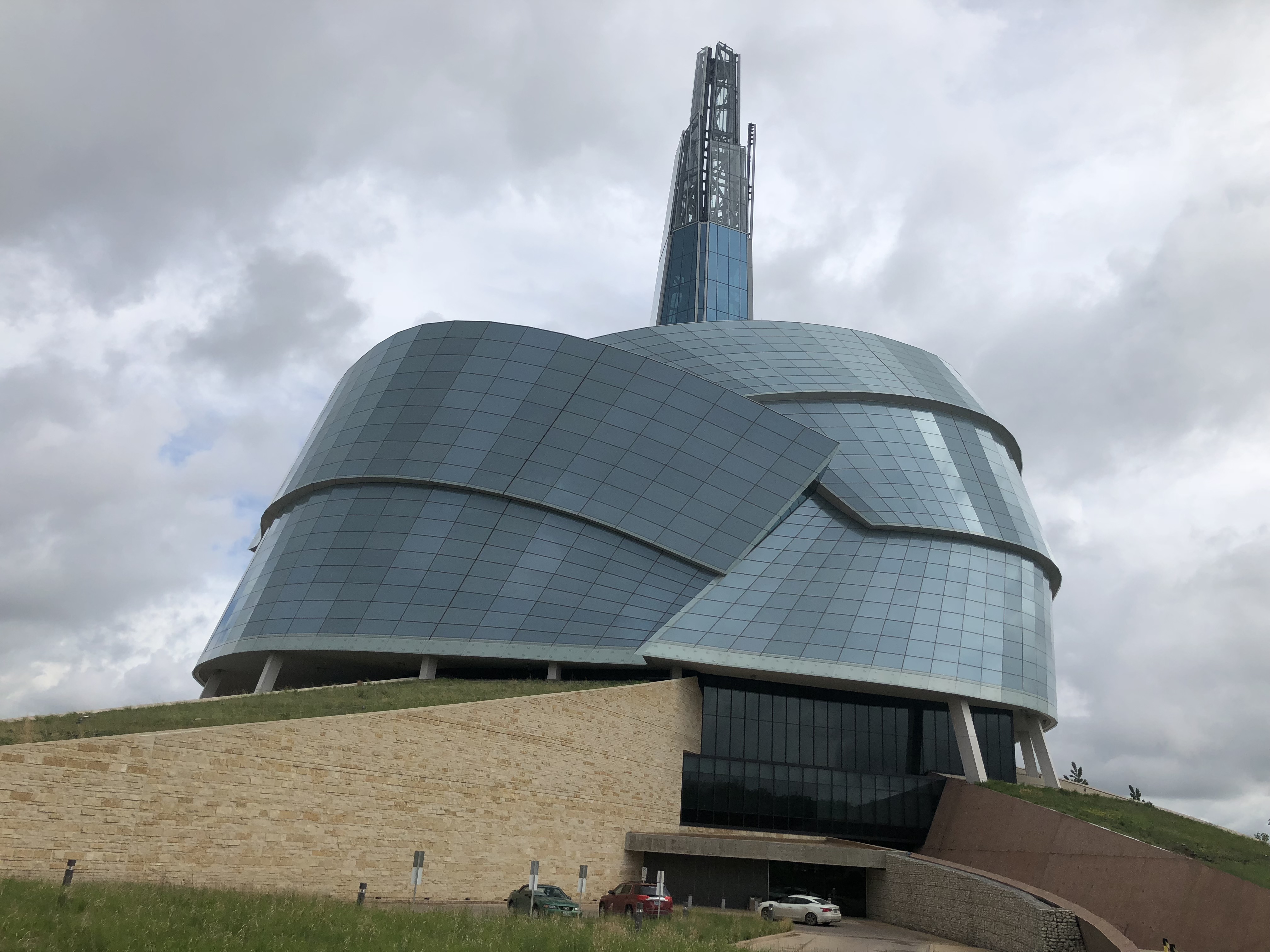
You will never guess my favourite museum
From childhood atlas dreams of Winnipeg to standing inside the Canadian Museum for Human Rights, this post traces how one remote city produced my favourite museum in the world. Discover what makes this institution so powerful—from its architecture and funding story to its role in human rights education and soft diplomacy. (5 min read)
In 2019 I presented a paper at the Metropolis World Migration Conference in Ottawa, Canada on behalf of the Australian National Maritime Museum. I combined this trip with visits to 17 migration and major museums throughout the USA and Canada.
The purpose of the visits was to consider better practice in migration and adjacent story-telling by some of the newest and leading museums in the USA and Canada as well as explore migration themed exhibition and loan opportunities. I loved visiting these museums and learned a lot. I took over 3000 photographs and collected visitor information (guides, plans, donation information, corporate reports) and books about each museum, along with some of their merchandise.
Curiously, my trip to the USA coincided with Migration Heritage Month in New York City – with several cultural institutions offering migration themed programming. New York is also home to the Roman Catholic patron saint of immigrants, St Frances Xavier Cabrini, whose shrine is a pilgrimage destination for American immigrants and others. I was blessed to visit this shrine on Mother Cabrini’s feast day and to venerate her relic (although that experience did not feature in my study tour report to government).
When I was a kid I used to love reading the atlas more than anything else. And some places really grabbed my attention. The ones I remember best were the large green country in South America (which I have now visited 13 times), Madagascar (which I am yet to visit) and Winnipeg, Canada (which is the subject of this article).
The Canadian Museum for Human Rights in Winnipeg is the stand-out of my study tour and my favourite museum of all time (followed by the 26 Martyrs Museum in Nagasaki and the Duomo Museum in Florence).
By examining and celebrating stories from across Canada and around the world, this museum is stimulating thought, dialogue and action. Ultimately, the museum is creating inspiring encounters with human rights.
Located where major rivers and historic cultures come together in Winnipeg, in the heart of Canada, the Museum is a place of hope and optimism; a place that encourages people from all walks of life to connect with something much larger than themselves and acknowledge that they have a direct stake in building a better world.
Despite being located in a remote Provincial capital, the museum offered a truly excellent visitor experience, with the full spectrum of interpretation methods; compelling objects and with visitor engagement that moves beyond interactivity to action.
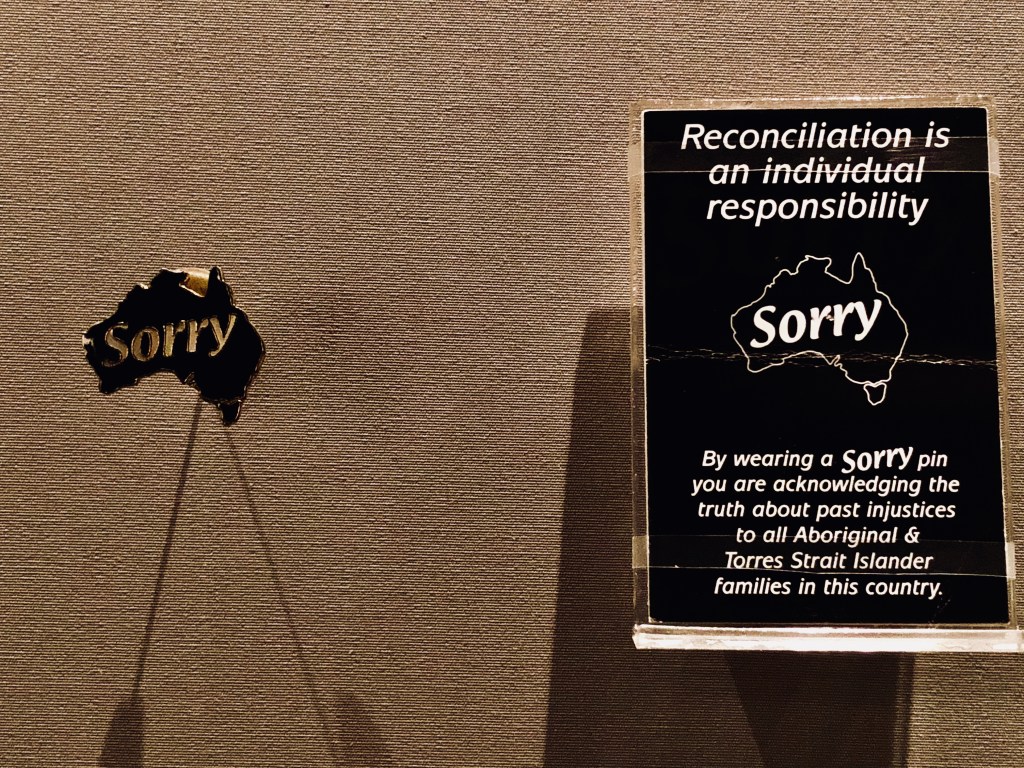
I was deeply moved by the museum building and from the first object I saw (Australia’s apology to the Stolen Generation!) to the last (in a temporary exhibition on Rohingya). The site has Indigenous significance (over 4000 objects found during excavation) and the treatment of Indigenous issues is well done, particularly the design of the circular pod that introduces the relevant gallery.
The creation of this museum is an extraordinary example of the resilience one needs to work in the arts and culture. It opened in 2014, 11 years after it was first announced (2003) and 6 years after the passage of enabling legislation (2008).
Now a Federal institution, the museum receives an annual operational allocation from the public purse (a miserly $22M in 2019).
The building of this museum, which cost over $350M, was co-funded by the Federal ($100M), Provincial ($40M) and Local Governments ($20M) but made possible by a fantastic philanthropy campaign driven for over a decade by the Asper family (raising $148M from 7800 donors). A Federal and Provincial loans/guarantee for $70M was used to leverage support from major banks and get the project over the line.
In retrospect, governments and the civil service were not keen on this museum and it really warms my heart that so many citizens of goodwill made it a reality. A series of videos of donors showcases the motivations and challenges of fund raising and the bureaucratic resistance in Ottawa.
The Canadian Museum for Human Rights building was designed by architect Antoine Predock. The master designer for opening exhibitions was the internationally renowned Ralph Appelbaum Associates. I could not resist buying the book about the creation of the museum.
The mission of the museum is, inherently, progressive and, by nature, provocative. It is a magnet for criticism and there has been a bit of that over the last few years. Nevertheless, at a time when international law is under attack and human rights are being violated in many places, the world needs this museum more than ever. I cannot help but think that the creation of a similar institution in Australia would send a powerful signal domestically and internationally that human rights and international law are priorities for Australia.
Finally, I share some of the broader observations of all the museums I visited on this trip:
- The national museums in Canada, and particularly the Canadian Museum for Human Rights, personify and embody brand Canada – they are inclusive, welcoming, compassionate, etc. They help with soft diplomacy, particularly given Canada’s international standing.
- The national museums are substantial and made of very fine materials and most make a point of highlighting the international origins of their building materials.
- The national museums are huge in scale compared to Australia. The interiors and exteriors are mostly striking, with clean lines which facilitated natural flow.
- Most museums were very text heavy but there were also lots of digital opportunities and, significantly, lots of opportunities for visitors to express their opinions.
- The most outstanding museums featured iconic objects that were beautifully interpreted.
- The newer museums used boards of scholars during the development phase and for temporary exhibitions.
- There is often information about building design and curation offered to the public and the esoteric and cultural design considerations are not veiled from visitors. In the standout sites, the energetic contribution of the various elements is explicit.
- The design of several of the sites recognised broader national responsibilities of the institutions (eg civic receptions; important national gatherings; major outdoor events)
- Several of the museums have inbuilt features which make them destinations in themselves (such as the tower of light of the Canadian Museum for Human Rights)
- Almost all museums had airport style security screening or bag checking
- The retail offer was superior to Australian museums. The Aga Khan Museum was, by far, the most beautiful and offered the most appealing merchandise. The Museum of African American History and Culture was the most popular and offered the largest range of museum branded/inspired merchandise.
- None of the museums offered food or service of the standard of Australia’s major museums.
I hope this post reassures you that great work is being done in the world’s cultural institutions to educate, inspire and uplift people for the greater good.
Namaste
You might also like:
→ Sea Country and the fight for Indigenous sea rights
© Paul McCarthy & Iluminar.au

