Sea Country and the fight for Indigenous sea rights
The Yirrkala Bark Petition of 1963 set in motion a decades-long fight for Indigenous sea rights in Australia. I came to this story late — and unexpectedly — through one of the most spiritually powerful exhibitions I have ever experienced. (5 min read)
63 years ago today, on 14 August 1963, the Yirrkala Bark Petition was presented to the Australian Parliament. Signed by 12 representatives of all the clan groups of Yirrkala in Arnhem Land (Northern Territory), the petition objected to the proposed Nabalco bauxite mine at Nhulunbuy (Gove) but the principle inherent in the petition was recognition of Indigenous land and sea rights.
While the Yolngu rights were rejected in 1963, the case prompted the 1973 Woodward Royal Commission into land rights which led to the enactment of the Aboriginal land rights legislation in the Northern Territory in 1976.
Two decades after the Yirrkala Bark Petition, in 1992, the High Court overturned the legal fiction of terra nullius and established the concept of native title in Australian law, recognising that Indigenous peoples’ traditional rights to land could survive British sovereignty.
The Mabo decision led to the Commonwealth Native Title Act 1993, which provided a framework for Indigenous groups to claim rights to their traditional lands, though claims remain subject to strict evidentiary requirements and do not grant exclusive ownership.
Living in Queensland, I heard a lot from conservative media outlets about land rights and the Mabo decision, especially whether pastoral leases are extinguished by native title (an issue considered by the High Court in 1996). But, to my great embarrassment, I had not heard about sea rights until I came to work at the Australian National Maritime Museum in 2016.
The gap in my knowledge is understandable – sea rights have rarely received the same public attention as land rights – but it makes the story I am about to tell feel all the more remarkable to me personally.
In 2008, the High Court held, by a five to two majority, that Aboriginal land in the Northern Territory includes exclusive rights regarding commercial and recreational fishing in tidal waters overlying Aboriginal land in the intertidal zone and tidal rivers to the low water mark. In other words, this Blue Mud Bay decision recognised the sea rights of the traditional owners across the country.
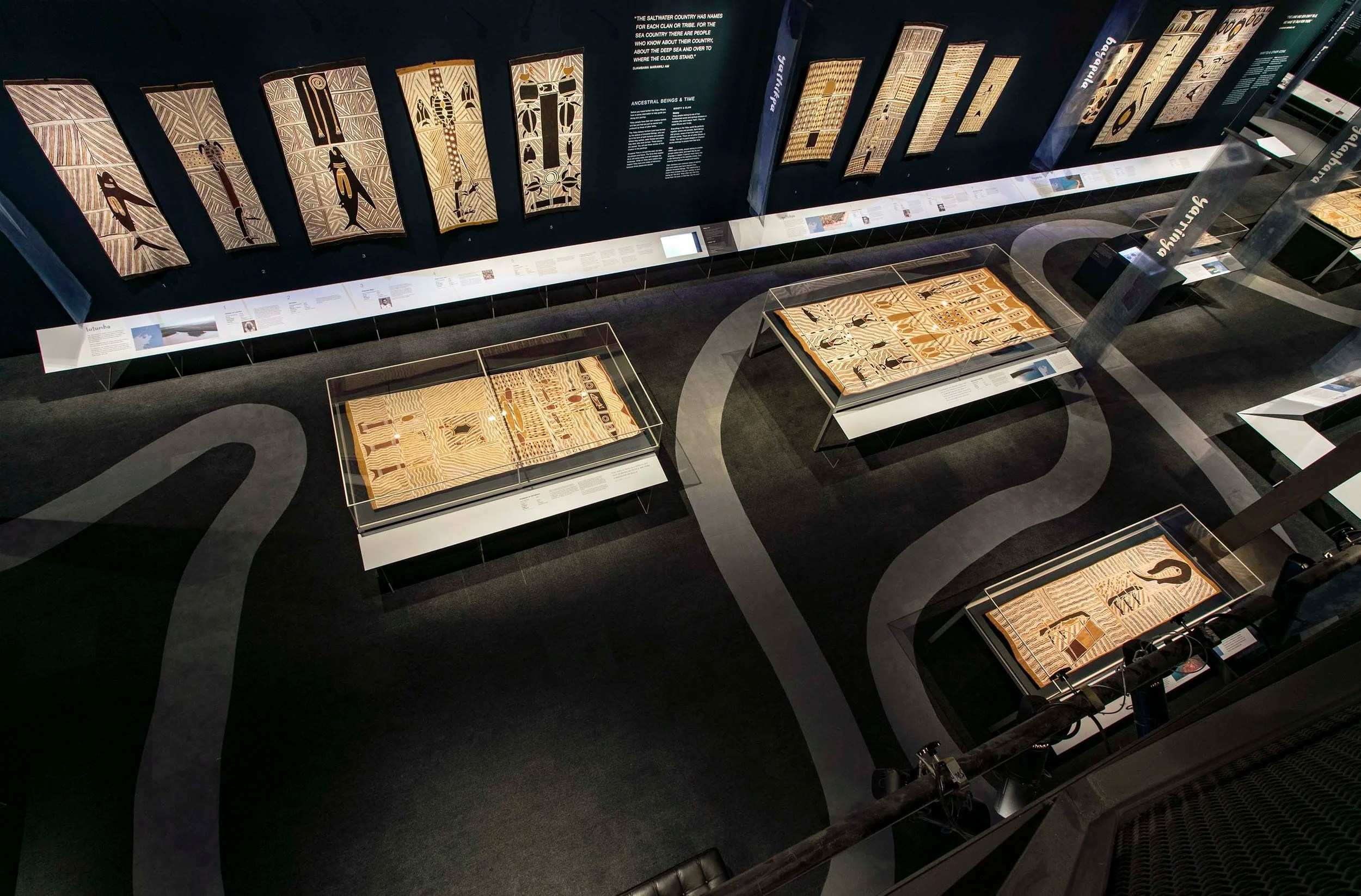
Most interesting is that the evidence presented to the High Court in the Blue Mud Bay case included paintings on bark by Yolnu artists.
Art is used by the Yolnu people in ceremonial performances, but also as legal documents and as a way to map the landscape and the relationships between people. Their bark paintings contain sacred patterns or designs known as miny’tji, that were created by Ancestral Beings.
Disgusted at the repeated invasion of their precious waterways and the sacrilege of beheading Baru (the ancestral crocodile) in his own nest, Yolnu elders decided to use sacred art to explain their lore and law to outsiders. This idea was supported by the Australia Council by a grant to the Buku-Larnggay Mulka Art Centre in 1998 to make the paintings. These bark paintings were offered to the Australian National Maritime Museum and acquired in 2001 with the assistance of Mr Stephen Grant of the Grant Pirrie Gallery. While priceless, the bark paintings are amongst the most valuable items in the Museum’s collection, revealing previously secret spiritual knowledge and explaining the spiritual and legal basis of the people’s ownership of Saltwater Country.
I was very fortunate to join the Museum at a time of renewed focus on the contribution of Indigenous arts and culture to the country’s national maritime story. This included employing Indigenous staff, strengthening engagement with community, growing the collection and presenting Indigenous themed exhibitions and programs. While I led the development of the Museum’s Reconciliation Action Plan, I was mostly an enthusiastic cheerleader for this work and the connection is deeply personal (as I have 2 nieces and 2 nephews who have Indigenous ancestry).
In the lead up to the 10th anniversary of the Blue Mud Bay sea rights decision, the Museum’s Indigenous Programs team created a stunning exhibition of the bark paintings which I will remember for the rest of my life.
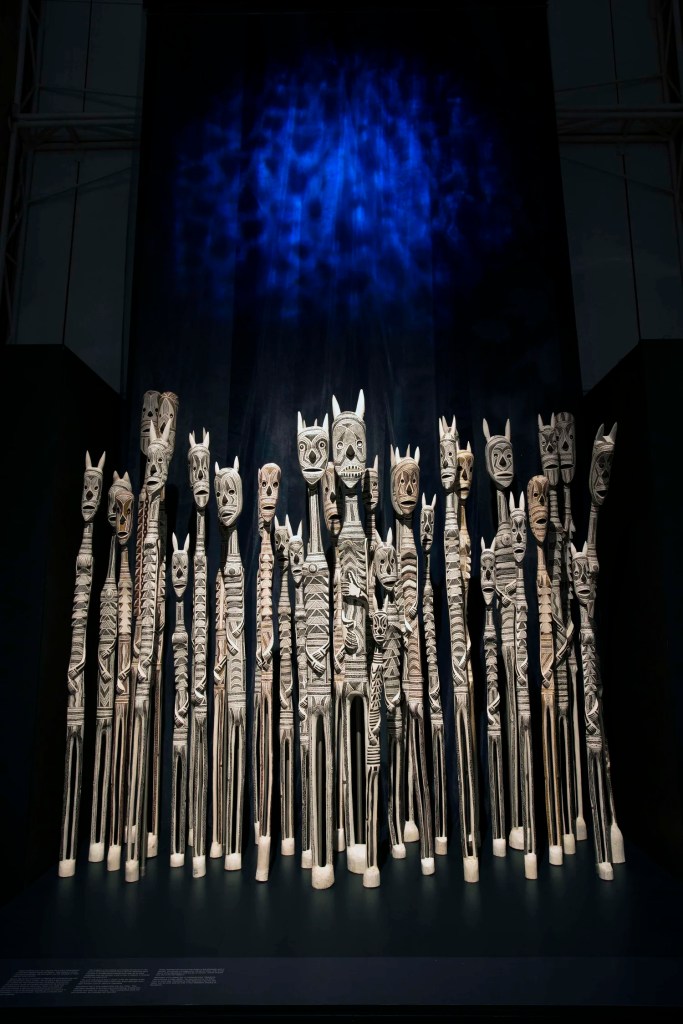
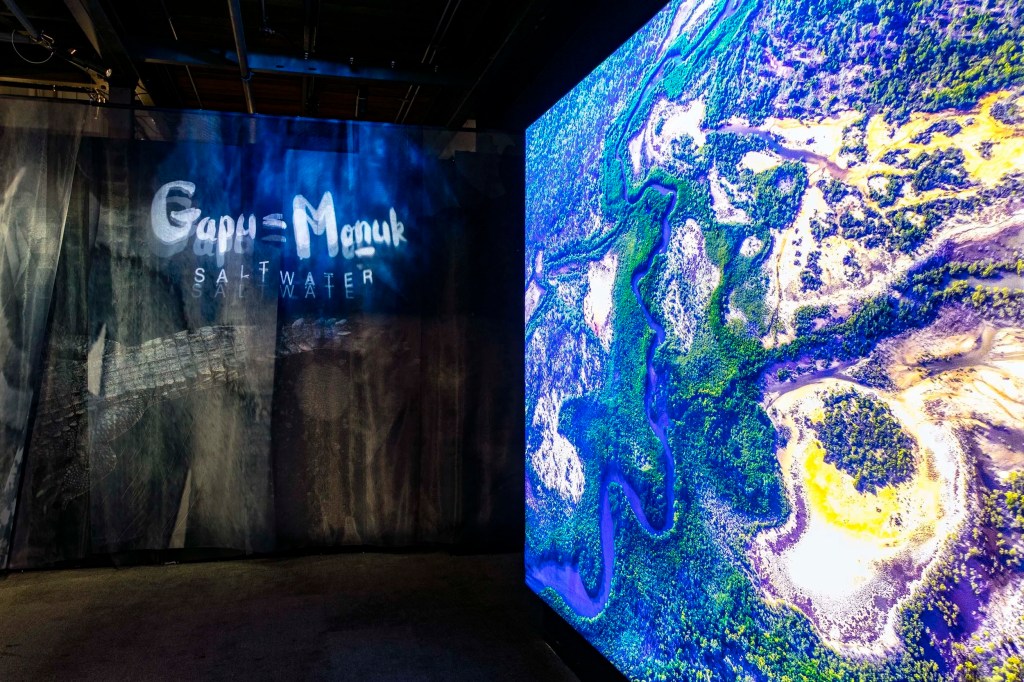
Titled Gapu Monuk: Journey to Sea Country, the exhibition was a display of 37 bark panels and three dimensional sculptural works from the museum’s collection. In total there 80 works by 47 Yolnu artists, from 15 different homelands.
The opening of the exhibition was remarkable. The Museum arranged for a large group of people from Yirrkala, including Djambawa Marawili AM the principal ceremonial leader of the Maḏarrpa clan of the Yolŋu people, to be present. My role at the opening was to greet and escort the politicians attending, including ALP Senator for the Northern Territory Malarndirri McCarthy (no relation).
As Senator McCarthy was late arriving, she and I missed an impromptu sacred ceremony performed over the art works. In fact, as we were walking into the gallery, the visiting Yolnu people, in their traditional paint and clothing, were leaving. As each of them passed the Senator I saw their faces light up and break into a smile. And when we arrived in the gallery itself, the Senator and I both had tears streaming down our faces because of the incredibly high vibration of the space. Neither of us knew that ceremony had been performed just a few minutes earlier but we certainly felt it. It was later explained to me that the ceremony activated the spirit figures in the art work to help audiences understand.
I revisited the Gapu Monuk exhibition many times over several months and the intense loving energy of the works did not diminish. Indeed, when I discreetly meditated in the space it seemed to intensify.
I cannot presume to speak about the cultural side of the making of saltwater barks or explain more than my own experience of the exhibition. But what I can confidently say is that what was created by the Yolnu is a unique treasure for humanity, not just the people of Australia.
Fittingly, in 2019, the exhibition won the prestigious Museums + Heritage International Project of the Year with a budget of less than 1 million pounds. The exhibition also won several Australian awards.
You might also like:
→ Discovering Indigenous Coogee: What’s Here, What’s Nearby, and What’s Missing
© Paul McCarthy & Iluminar.au

