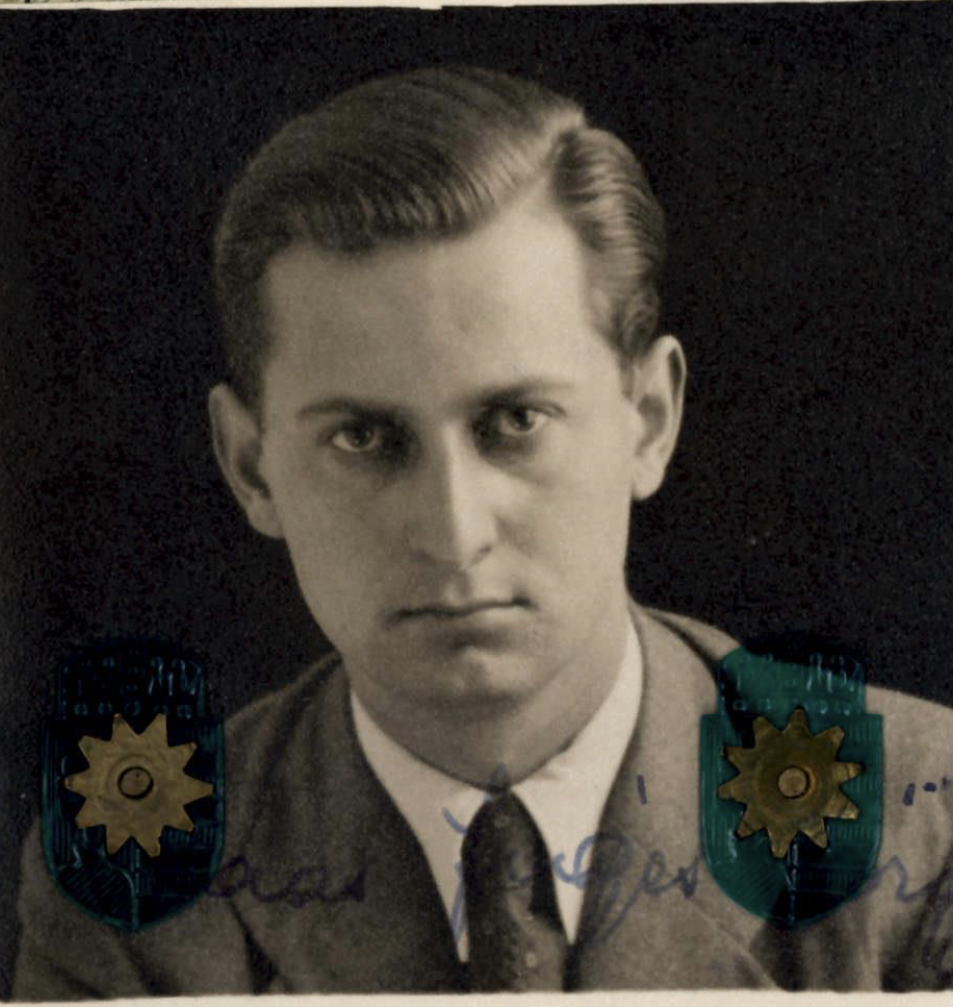
Remembering friends who found Australia: Honouring Fred Hall
In 2021, Australia’s National Monument to Migration was dedicated at the Australian National Maritime Museum — and among the 34,000 names on that wall is Fred Hall, a Jewish émigré from Budapest who served in the Australian Army, built a business from nothing, and became a treasured friend of the McCarthy family. (4 min read)
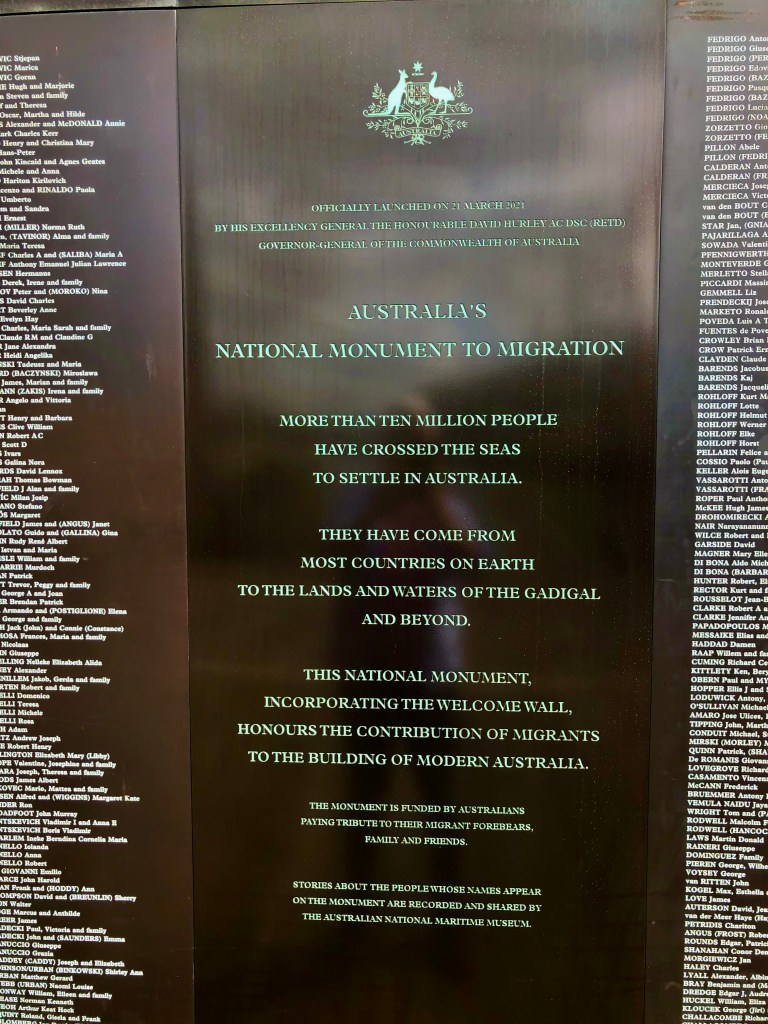
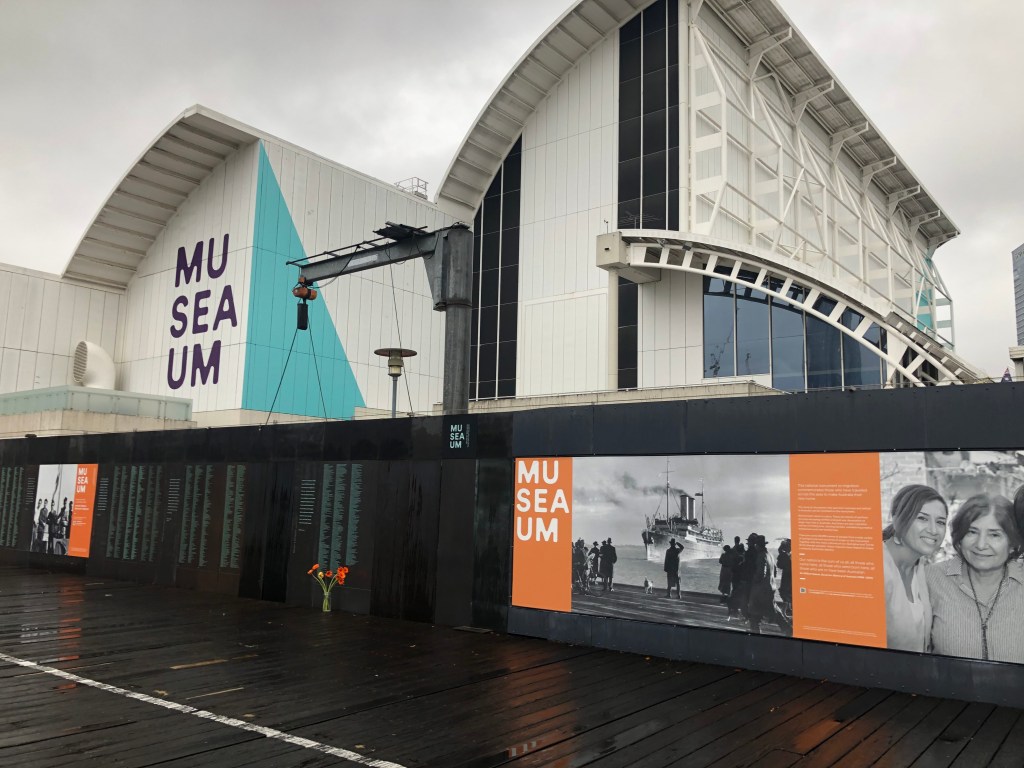
Although about half of the Australian population was either born overseas or has a parent who was born overseas, our country does not have a national migration museum. There are State museums dedicated to migration in Victoria and South Australia but, tragically, none at the national level. The next best thing is a small gallery and program at the Australian National Maritime Museum in Sydney, including Australia’s National Monument to Migration – a wall on which the names of 34,000 migrants are inscribed in bronze.
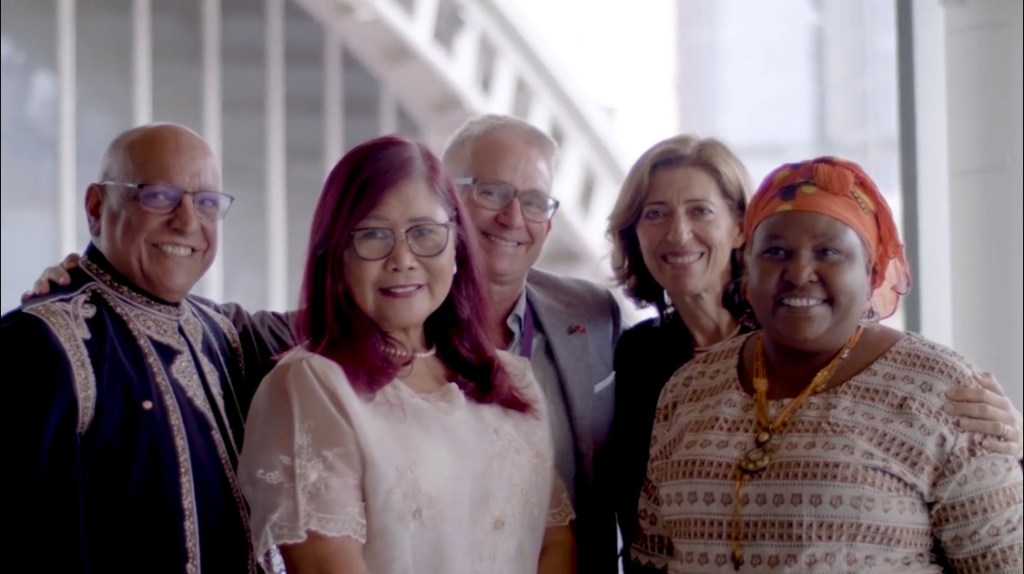
My happiest day at the Museum was on Harmony Day in 2021. The Museum offered a day of migrant themed programming and the Governor General dedicated Australia’s National Monument to Migration. The names of the most recent donors to the Museum’s Migration Heritage Fund were inscribed on the “Welcome Wall” and unveiled. It was a very moving ceremony, with a special performance of Bruce Woodley’s song “All these things I am” and speeches by migrants from Uganda, The Philippines, Kenya, Greece and the United Kingdom. The Museum’s Chairman and Director, both immigrants, also spoke.
The dedication of the national monument was an important step for the Museum in strengthening awareness of the contribution of migrants to the building of modern Australia and it complemented an uplift in migrant themed programming, as well as enhancements to the collection made possible by donations to the Migration Heritage Fund.
You must pay to have your name inscribed on the National Monument to Migration but when I was at the Museum we established a program to cover the cost for asylum seekers and migrants who could not afford to register. Importantly, the contract with donors is that funds raised from the sale of subscriptions are not used for museum operations or fleet costs.
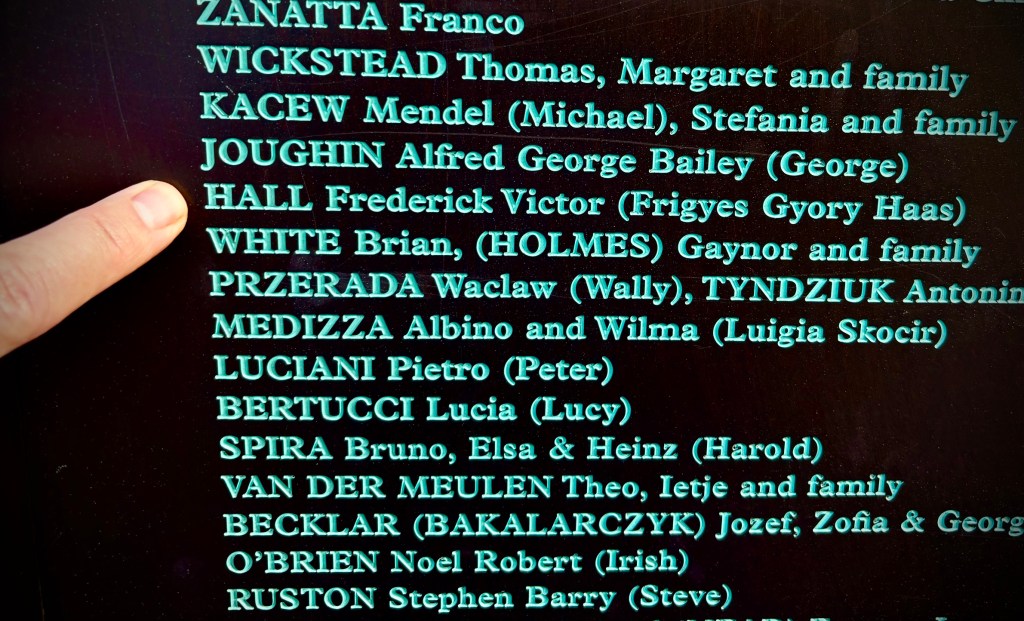
The names of several people who are really important to me are on the national monument – my friends Po, Antonello and Ayumi, several colleagues from the museum, the ancestors of some of my heroes (like Sir William Deane) and the dear friend of our family who is the subject of this post.
In the lead up to the dedication of the National Monument I felt it was important and timely to acknowledge Fred Hall, a man who had been very significant to my family. It pained me that his life story was not recorded anywhere and I thought the Museum was the perfect place for it to be. This is what I submitted to the Museum about Fred:
Twenty-two year old student Frigyes Gyory Haas arrived in Fremantle, Australia on the SS Orcades on 18 December 1939 and then travelled to Sydney arriving on 26 December. He was one of 51 “aliens” on the ship from London and he was registered as “Frederick Haas” but later changed his name to “Frederick George Victor Hall”. He chose his name after the British politician and journalist Commander Stephen King Hall.
Fred was born in Vienna to Jewish parents in 1917. Sadly, his mother died in childbirth. Fred lived in Budapest from 3 months of age. He was brought up by his father (Robert Haas) and his step-mother (Margaret Haas) to whom he was close. Fred had a younger half-sister, Eva. His sister, father and step-mother migrated to Canada in 1940.
Fred’s parents were both from Slovakia. Prior to WW2, the family was very wealthy from a successful timber business. Fred was well educated and spoke 5 languages. After a year of travelling in Europe and visiting business connections, he moved to London at the age of 20. While there were signs of the emergence of Nazism in Hungary while Fred lived there (the family’s cottage, like many others, was chalked with the Swastika), he left the country to establish his own life. Feeling that Britain did not offer much opportunity, he sought to emigrate to either Canada or Australia.
In Australia, Fred attended the Hawkesbury Agricultural College in Richmond, NSW for about 6 months. He then used all his money to buy an over-priced chicken farm and this business failed. Two years later he enlisted in the Australian Army at Parramatta in February 1942. At discharge, on 11 June 1946, he had served in the 33 Works Company at the rank of private.
Like many Eastern European migrants, Fred was monitored by the Commonwealth Investigation Service in the 1940’s and his request for citizenship was initially rejected. However, he was ultimately naturalised on 28 August 1944 while he was in the Army. The transcript of Fred’s appearance before the Alien Advisory Committee has been digitised and published online.
Fred worked as a manufacturer’s agent after the war and on 3 July 1964, he finally registered his business FV Hall and Co. Pty. Ltd. He imported clothing, manchester and other textiles from many countries and was a trail-blazer in forging business relations with China, in particular. Fred travelled widely for his business, in Australia and abroad. His business was his life and he never married.
Fred passed away on 17 November 1980, aged 63 years. He was survived by his sister Mrs Eva-Maria Ross of Canada. Fred bequeathed the bulk of his estate to a charity for Jewish widows. He is buried in the Mt Gravatt Cemetery in Brisbane.
Fred was honoured on Australia’s National Monument to Migration by the McCarthy family. Fred’s story was researched with the assistance of the National Archives of Australia and his family in Canada. The inclusion of Fred’s story in the national collection means his personal contribution to the making of Australia, and his generosity to the McCarthy family, is forever recorded.
You might also like:
→ You will never guess my favourite museum
© Paul McCarthy & Iluminar.au

