Novena to St Ignatius of Loyola
A prayer is suggested for each of the nine days leading up to the feast day of St Ignatius of Loyola on 31 July (7 min read).
A novena is a traditional prayer practice where you pray for nine days (or, less commonly, nine hours in a single day). The prayers are usually focused on a specific intention—like asking for help, guidance, healing, forgiveness, or giving thanks. When a novena is prayed to a saint, the prayer is for the saint’s intercession. Ordinarily, a novena begins 9 days before the saint’s feast day but it can also begin on the feast day or said any time during the year.
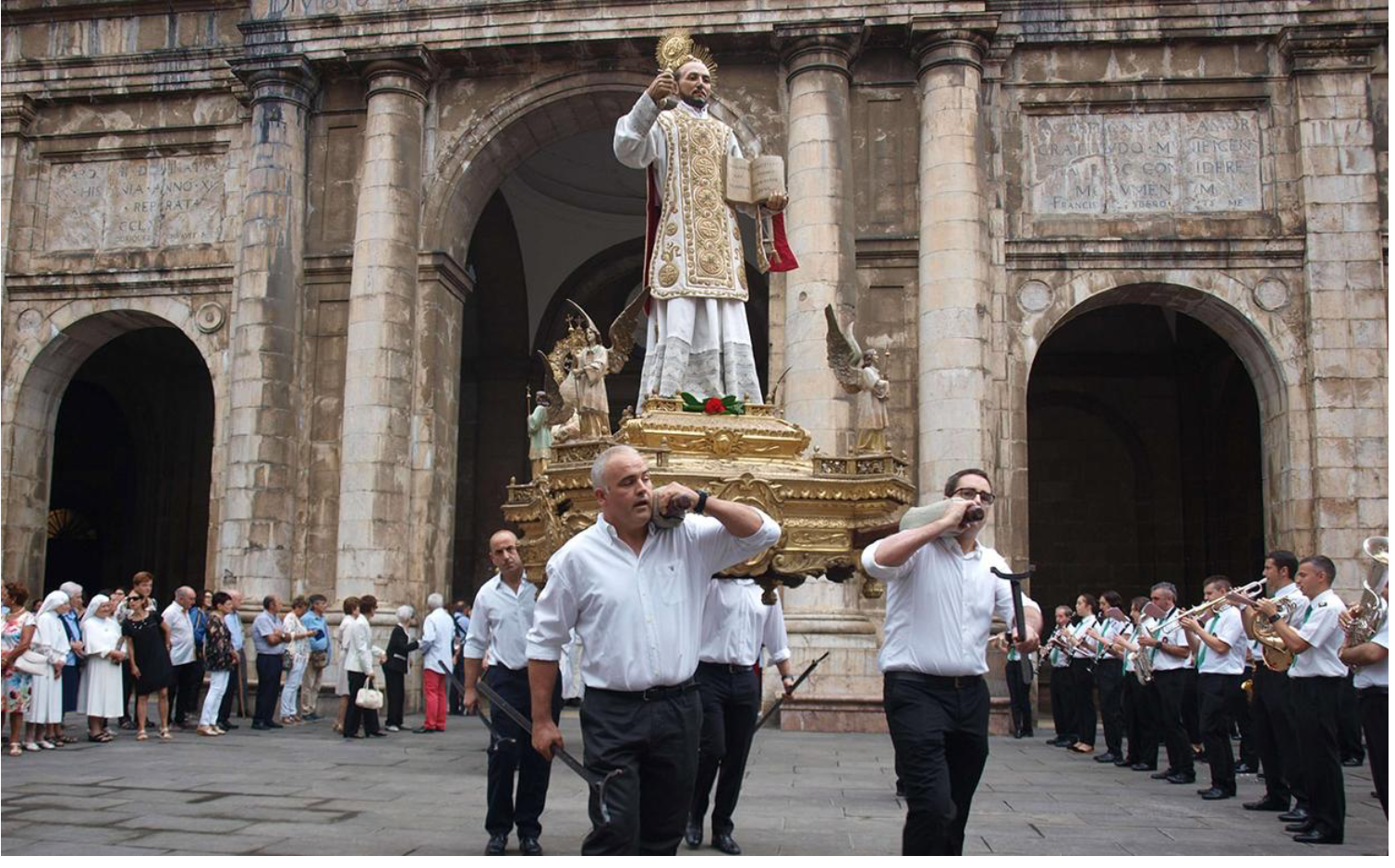
The feast day of St Ignatius of Loyola is 31 July – the day of his passing. The feast day celebrates his return to the spirit realm. Most Catholic churches and schools will acknowledge the feast of St Ignatius and, in some countries, there are solemn processions to mark the occasion.
Not surprisingly, pilgrims come from across Spain and beyond to prepare for and celebrate Ignatius’ feast day (San Inazio Jaiak) at the Sanctuary in Loiola. After 9 days of preparation, special masses are said and there is a procession of the relic of St Ignatius through the grounds of the Sanctuary. In nearby Azpeitia, the feast day is acknowledged with traditional Basque dances, music, and the running of bulls through the streets.
I met St Ignatius through a healing and meditation centre dedicated to him in central Brasil. Ignatius’ feast day is celebrated at the centre with much love and care. It draws a very large number of people from Brasil (and around the world). I experienced the feast of Dom Inacio several times and on one occasion was given a holy card with the background information and novena below.
The suggested novena involves daily reflections on the life of Ignatius and a suggested prayer.
Life of Ignatius Loyola
Born in 1491 as 13th and last child of noble birth, in the Castle of Loyola, in the Basque area of Spain. Initially a soldier, Ignatius was wounded in a battle in Pamplona when he sought to defend his king against the French troops. His life changed radically after this incident. During a long convalescence at the family castle, he read some biographies of saints and ‘Imitation of Christ’. Hereafter he decided to lay down his sword at the altar of the black madonna at Montserrat, Spain. Later retreating to a cave in Manresa (1522), he wrote the celebrated Book of Spiritual Exercises.
After a pilgrimage to the Holy Land, Ignatius became a student in Paris, at more than 30 years of age. In Montmartre, with six companions, he took vows in 1534. Ordained a priest in 1537, Ignatius was elected General of the newly founded Society of Jesus in 1541. In 1551, Ignatius founded the Roman College, the current Gregorian University. In 1549, he sent Father Nobrega and five companions to Brasil. These were followed, in 1553, by Fr Jose de Anchieta and other Jesuits.
Ignatius died on July 31, 1556 and he was canonized in 1622.
Today, the Society of Jesus is still present in this world, seeking to live the motto of St Ignatius: “All for the greater glory of God”.
The Novena to St Ignatius by Fr Roque Schneider SJ
Opening daily prayer for each day of the novena:
Lord, sustained by Your strength and protection, help us live out our commitment to the Gospel and to our brothers and sisters. We know that building a more just, fraternal, and Christian world depends on each of us. Through the blessings of Our Lady and the intercession of St Ignatius of Loyola, humbly grant us the grace we now ask for: (mention your request here). Through Christ our Lord. Amen.
Day 1 (22 July/31 July): The Conversion of St Ignatius
- Worldly Ambitions: Ignatius of Loyola was a vain, worldly officer who dreamed of a brilliant military career.
- The Turning Point: At age 26, during the Battle of Pamplona, a cannonball struck him and shattered his leg.
- Divine Inspiration: While convalescing, he read biographies of the saints and began to wonder: “If they could do great things for God, why can’t I?”
- Spiritual Reflection: The grace of God works wonders when we truly allow Him to work within us.
Day 2 (23 July/1 August): Devotion to Our Lady
- Marian Devotion: Ignatius cultivated a deep devotion to the Blessed Virgin Mary.
- Surrender of Arms: At the feet of the Queen of Heaven in Montserrat, Spain, the knight laid down his sword during an all-night prayer vigil.
- Spiritual Exercises: In a rustic cave in Manresa, near the River Cardoner, he composed his famous Spiritual Exercises under the watchful eye of Mary.
- Our Lady of the Way: Later in Rome, Ignatius held a special veneration for Our Lady of the Way (Madonna Della Strada).
Closing Prayer:
O God, following the example of St Ignatius, may our filial love grow for Mary—Mother of the Church, Queen of Apostles, and the “star of an ever-renewed evangelisation.”
Day 3 (24 July/2 August): Building the Kingdom
- The Pilgrim Spirit: Throughout the rich life of St Ignatius, the concept of being a pilgrim and walking the earth was deeply important.
- Following Christ: From the moment he was captivated by Christ, Ignatius summarized his prayer in the Spiritual Exercises: “To love and follow Him more closely.”
- Eternal Journey: Life is a pilgrimage; we are travellers in time on our way to eternity.
- Fraternal Love: Those who turn to Christ can never turn their backs on their brothers and sisters.
- The Kingdom: God’s kingdom is built as we walk, unfolds through self-giving, and finds its fulfillment in God.
Day 4 (25 July/3 August): The Greater Glory of God
- The True Path: Jesus said, “I am the Way, the Truth, and the Life.” One day, Ignatius discovered this path and followed it generously.
- Embracing Truth: He recognized the truth and embraced it without fear, completely changing the direction of his life.
- The Greater Glory: Ever searching for the “Greater Glory of God” (AMDG), Ignatius founded the Society of Jesus (the Jesuits).
- The Jesuit Mission: He envisioned this missionary and apostolic religious order as a service to the Church, dedicated to the service of faith and the promotion of justice.
Day 5 (26 July/4 August): What Will I Do for Christ?
- Inspiration to Convert: In the lives of the saints, Ignatius found the inner strength to convert and follow Jesus Christ closely.
- The Guiding Question: From that moment on, a fundamental question guided his steps, thoughts, and actions: “What will I do for Christ?”
- Ignatian Ideals: His life was guided by grand ideals: spreading the Gospel, making Jesus known and loved, and tirelessly serving others without seeking human rewards.
- Grounded in Faith: Ignatius was truly a man of God, yet he always kept his feet firmly planted in reality.
Day 6 (27 July/5 August): A New Pentecost
- The Time of Mary: Presenting the Church as an instrument of communion and liberation, the Latin American bishops remind us: “This is the time of Mary, a time for a new Pentecost.”
- A Prayer for Balance: Holy Mary, patroness of Latin America, help us balance work and prayer, faith and life, in our efforts to evangelize.
- The Ignatian Rule: Following the wisdom of St Ignatius, let us “pray as if everything depended on God, and act as if everything depended on us.”
Day 7 (28 July/6 August): The Gospel of Love
- Civilization of Love: Speaking to the Jesuits in Rome, Pope John Paul II reminded them that above the ruins of hatred and violence, we must build a civilization shaped by the Heart of Jesus.
- Knowing Christ: All Ignatian spirituality, summarized in the Spiritual Exercises, is rooted in an intimate knowledge, love, and imitation of Jesus Christ.
- Natural Missionaries: Anyone who truly finds Jesus naturally becomes an apostle and a missionary.
- Trust in Grace: As Ignatius famously said: “Few souls understand what God would accomplish in them if they were to abandon themselves entirely to Him and allow His grace to mold them.”
Day 8 (29 July/7 August): Option for the Poor
- Servant of the Humble: As a teacher to children, young people, and simple hearts, and as a protector of the vulnerable, Ignatius made a definitive ‘option for the poor’.
- The Face of Christ: He chose this path because he recognized the face of Jesus Christ in every human encounter.
- Living Isaiah’s Mission: Dedicating his life to the selfless service of others, Ignatius revitalized the message of Isaiah: “The Lord has sent me to bring good news to the poor, to bind up the brokenhearted, to proclaim liberty to the captives, and to comfort all who mourn.”
Day 9 (30 July/8 August): The Father’s Will
- Christ’s Mission: Jesus had two ultimate desires: fulfilling the Father’s will and carrying out His redemptive mission.
- The Suscipe Prayer: Making this mission his own life’s purpose, Ignatius prayed his famous prayer of surrender:
“Take, Lord, and receive all my liberty, my memory, my understanding, and my entire will—all that I have and possess. You have given them to me; to You, O Lord, I return them. All is Yours; dispose of it entirely according to Your will. Give me only Your love and Your grace; that is enough for me. Amen.”
You might also like:
© Paul McCarthy & Iluminar.au

