Memories of Loyola
The birthplace of St Ignatius of Loyola, the Chapel of the Conversion, and the relic that brought tears — a pilgrim’s account of the Sanctuary of Loyola. (6 min read)
My tour guide, Jesus, looked somewhat dumbfounded when I told him that I expected the highlight of my Marian pilgrimage to be my visit to Loyola Castle.
“Not Fatima… Lourdes… Jasna Gora or even Medjugorje?” he asked.
“Are you devoted to Our Lady of Loyola? So few people had heard of her!”
“Do you mean Our Lady of Aranzazu?”
“No, St Ignatius of Loyola!”. “But why him?”
What a question!
I don’t think the organisers of my pilgrimage thought much about the connection between Mary and Ignatius when they planned the itinerary. Rather, Loyola simply offered a convenient and beautiful comfort stop for pilgrims travelling between Fatima to Lourdes.
Ignatius was devoted to Mary. Like many Spaniards, she was his favourite saint. And to her he attributes “The Spiritual Exercises” and the foundation of the Jesuit Order. She first appeared to him in Loyola Castle in 1521 when he had a near death experience after being wounded in a battle with the French in Pamplona. And we know from his autobiography she appeared to him on other occasions. And there is a beautiful statue of Our Lady of Loyola, in the basilica that bears his name, which evidences his love for Mary.
The Sanctuary of St Ignatius of Loyola is huge. It is built around the Loyola family castle which predates Ignatius and it includes a large basilica with a spectacular high dome in the Jesuit baroque style. While Jesuits came to lodge in the castle tower in 1682, the foundation stone for the sanctuary was not laid until 1688 and it took 50 years for the church to formally open (1738) but the high altars were not completed until well into the 19th century.
The sanctuary complex includes the basilica, a Jesuit college, museum, library, youth hostel, spirituality centre and very small store.
We began our visit to Loyola with about half an hour in the basilica. This houses statutes of Our Lady of Loyola and various Jesuit saints, such as Xavier, Borgia and Faber. The church is nice enough but, to tell you the truth, I was so excited that I had trouble tuning into the energy. Interestingly, my Mother thought the energy was quite strong and she took many photographs with orbs – her first!
The Loyola family castle has been restored, or rather significantly renovated, over the years but it is the building that Ignatius lived in. At the entrance to the tower house is the Loyola family crest – a cauldron hanging from a chain between two wolves. A statue of Ignatius’, depicting the scene of his canon ball injury in Pamplona, is in the forecourt and there is quite good commentary (in English) that explains the significance of this event. You may recall that Ignatius fought so valiantly in this battle that the French arranged for him to be carried to his family home to recover. There he had several gruesome and painful operations on his legs without either pain relief or antiseptic. Ignatius’ recuperation was distinguished by two important factors – the reading holy books and a near death experience – both of which led to his conversion from noble knight to Christian pilgrim, mystic, leader of the Jesuit Order and, ultimately, saint.
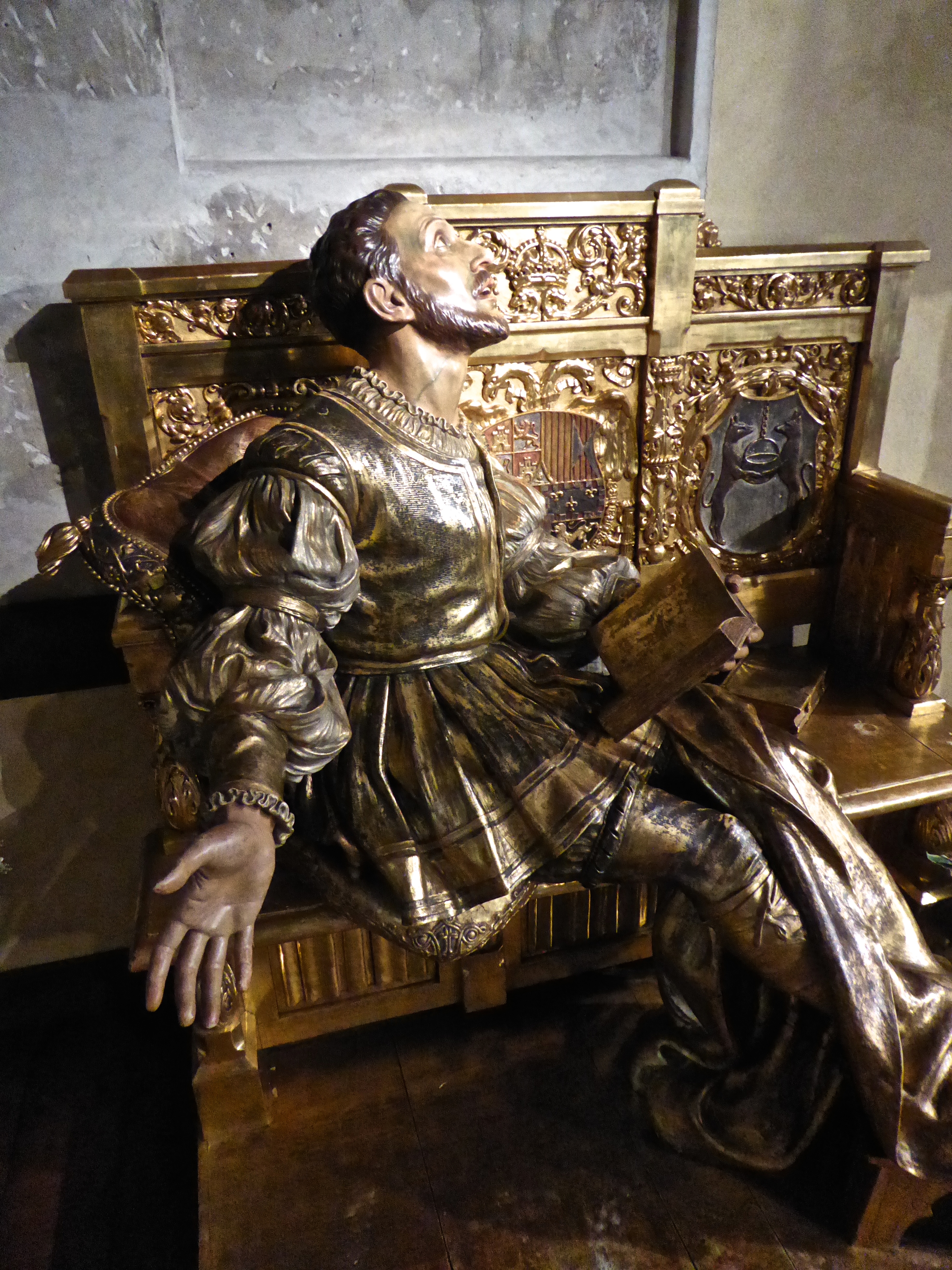
While the inside of Loyola Castle is interesting, the highlight is the Chapel of the Conversion on the top floor. This is the room in which Ignatius had his near death experience and his recuperation. It is a simple chapel, with a simple altar and benches around the perimeter. However, on the far side of the chapel is a stunning statue of Ignatius sitting in ecstasy on the edge of a bed. This statute, on the site of his conversion, is quite life-like and Ignatius tenderly holds out his hand to us, just like the Entity.
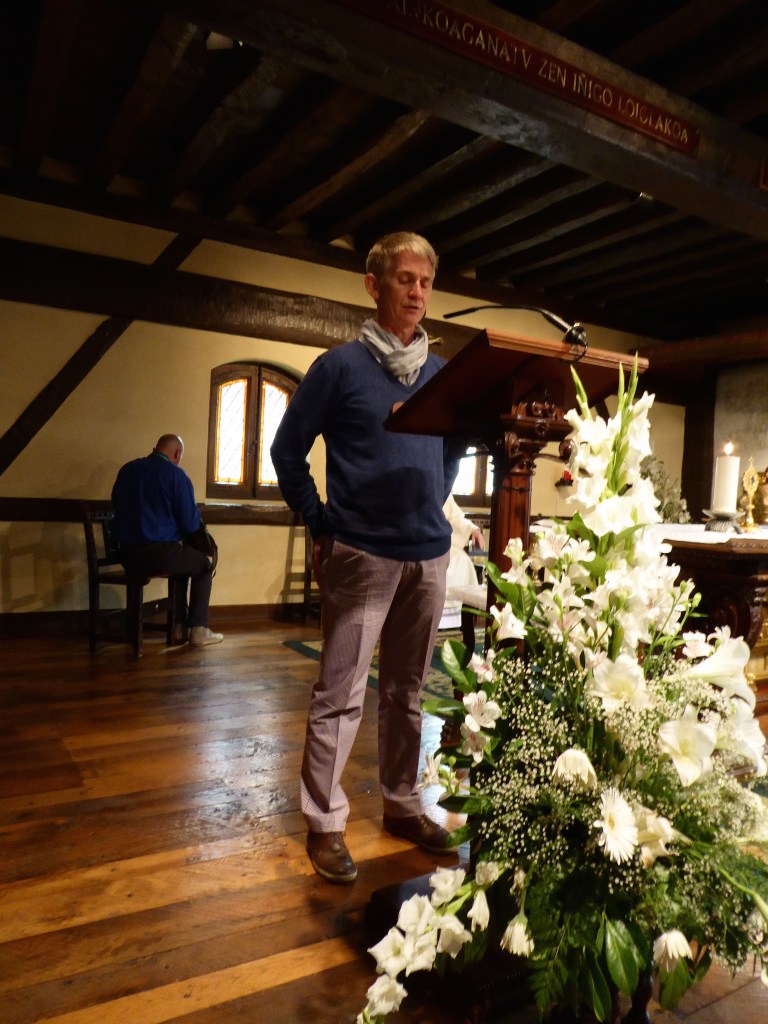
I was very fortunate to be asked to do the reading during our private mass in the Chapel of the Conversion. This huge honour was very special for me.
But the story gets even better!
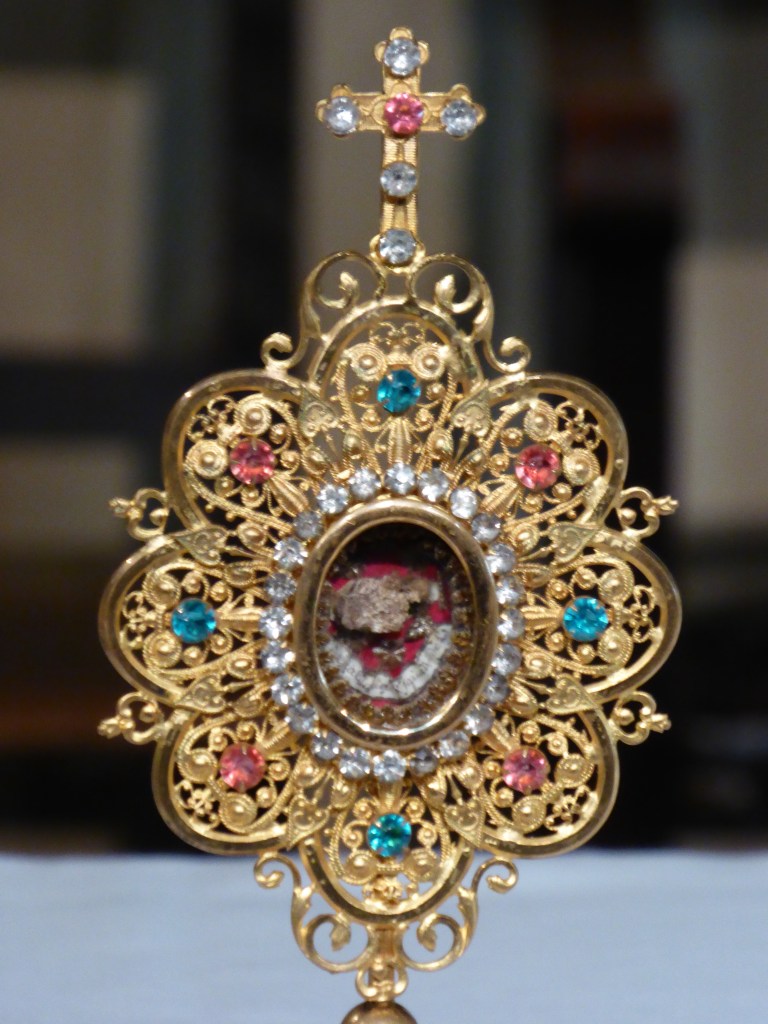
My guide, Jesus, understanding how much I love Ignatius, made special arrangements for a relic of Ignatius to be available for veneration at the end of the mass. The relic, a small piece of Ignatius’ skull, is kept within a beautiful jewelled reliquary. This is the most precious thing I have ever touched! I placed my rosaries on the relic and after the veneration ceremony I was given the opportunity to hold the relic against my heart. This was so moving.
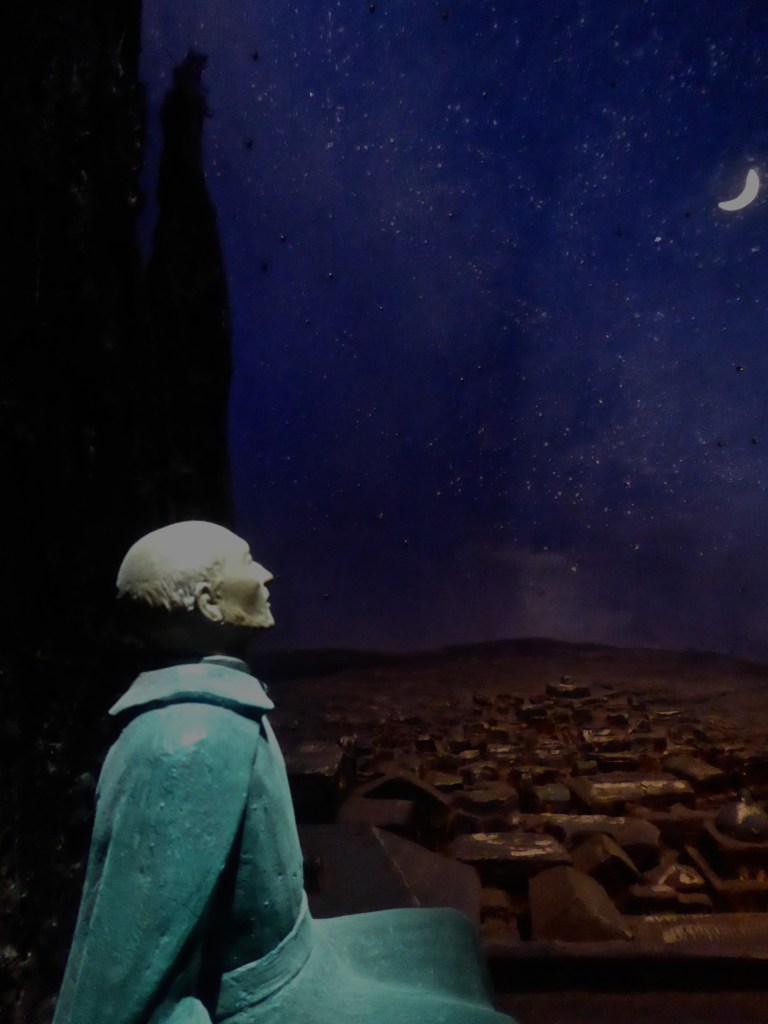
After the service many people asked me how I felt. Frankly, I was so excited by the experience that I was unable to tune into the energy of the chapel or the relic. But afterwards, when we toured the museum, which included a replica of the Black Madonna of Montserrat, several famous paintings of Ignatius, and an extraordinary diorama of the major events of his life, I was flying – full of energy and excitement. I bought holy medals for everyone in the tour group, and for my loved ones at home, and when the priest blessed them I had no doubt that Ignatius was present and that many prayers had been answered.
I left Ignatius with prayers for my brothers and sisters at the Casa Dom Inacio and, of course, for the Australian meditation.
If you love St Ignatius, then please consider visiting this beautiful area of Spain. It is very green, damp and hilly and quite unlike the south. But the beach at San Sebastian is not far away and one is also very close to France.
I hope this little movie gives a good sense of my experience of Loyola:
Obrigado Dom Inacio.
You might also like:
© Paul McCarthy & Iluminar.au

