Our Lady of Chartres, France
The veil of the Virgin, the labyrinth and 900 years of pilgrimage — why Chartres Cathedral remains one of the most powerful Marian sites in the world. (6 min read)
Chartres is a small town of about 40,000 people located 100km southwest of Paris. The town is most famous for its gothic Cathedral with unmatched spires and, in particular, stunning stained glass windows and labyrinth.
There have been five cathedrals on the Chartres site, with the first one built around the middle of the 4th century. The current one, which has been inscribed on the UNESCO World Heritage list, dates to 1205 (it took over 60 years to build), although it has been renovated over the years. Interestingly, the cathedral is built on the foundations of its predecessor and the earlier crypt is intact and still used.
The famous Chartres labyrinth, which dates to the 13th century, covers the whole width of the nave and is 262 metres in diameter. The labyrinth symbolises the path humanity takes to meet God. It invites pilgrims to meditate both with body and the mind. Some say that walking this labyrinth was a proxy for pilgrimage to the Holy Land during periods of conflict in the middle east. Unfortunately for me, the cathedral renovations of stonework and window cleaning required the labyrinth to be covered during my visit! There is, however, a less elaborate labyrinth in the cathedral grounds (but I think it only gets one as far as Crete… not Jerusalem).
The cult of Mary has been important in the Chartres area for over 1600 years and it has been a place of pilgrimage for a long time. In 1535, Ignatius of Loyola passed through Chartres, undoubtedly visiting the Cathedral. I’m sure many saints have been here and it is a shame there is not a list of them on the wall (as is the case in Loreto).
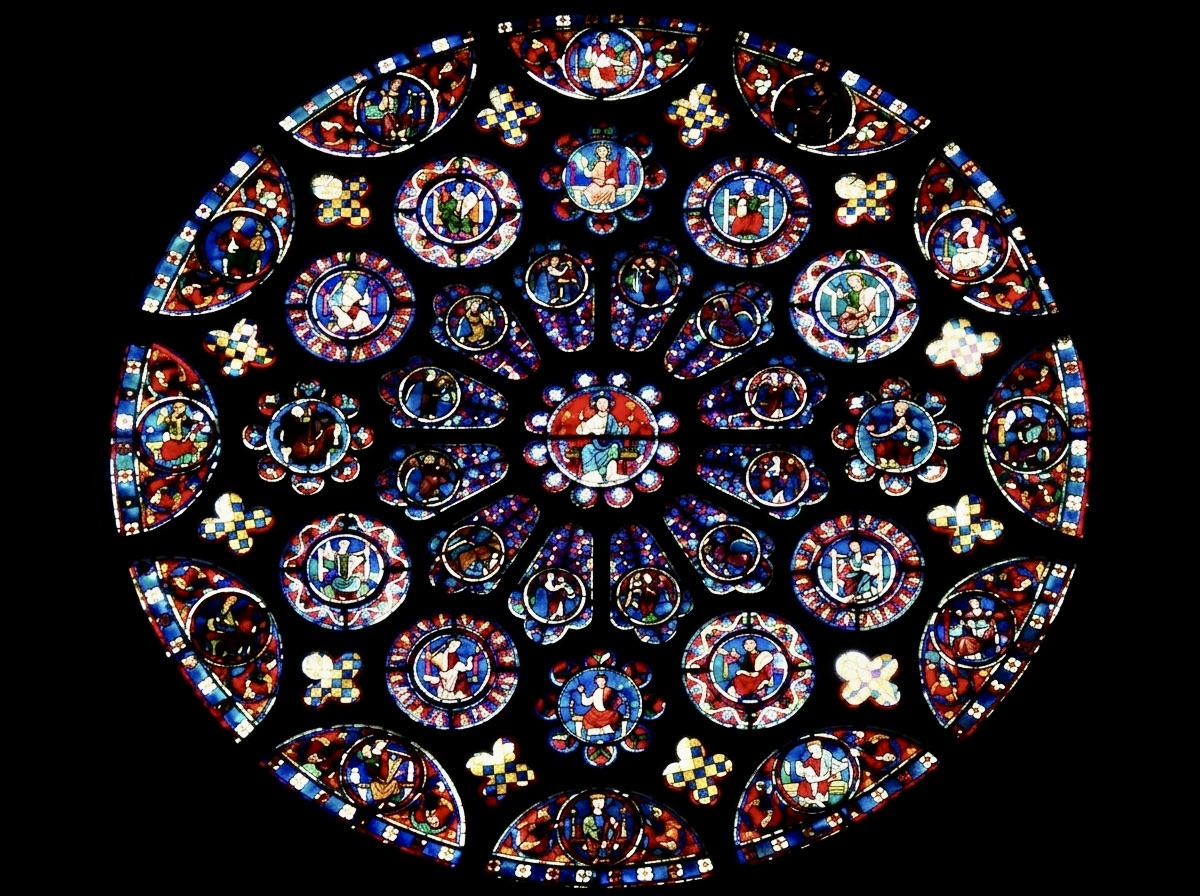
There are still some stained windows from the 12th century, including the famous window of Mary, called the Belle Verriere Window (which is said to be “the most beautiful representation in stained glass”). However, it is the cobalt blue and red colours of the windows that attracts most mention. I have posted several pictures of the windows because they are truly stunning and, with the current renovations impacting on lighting in the cathedral, I had a positively medieval experience of a gloomy space illumined by the windows.
Our Lady of the Pillar is another object of veneration in the Cathedral. She is a statute of the Madonna and Child made of pear wood from the mid 1500’s. Her chapel is the most prominent in the cathedral and it was the place of most candles and prayers.
Today, the crypt requires a separate visit. And it is the crypt that is the true “heart” of the cathedral – a secret, underground dimension. Apart from being the largest in the world after that of Saint Peter in Rome and Canterbury in England, what makes Chartres remarkable is that the entire structure – either the main cathedral or the crypt – does not contain a single tomb. But more than its size, people enter the crypt for its mysticism. One of the most enigmatic statues of the Christian era is hidden in the depths of cathedral: “The Lady of the Under Ground”, or “Notre Dame Sous Terre”. This statue is a replica of an old Black Madonna, the original destroyed during the French Revolution. Though a somewhat normal statue of the Virgin, there are old references to “a small black immemorial image”, which seems to have been pagan, rather than Christian, in both appearance and origin.
The most famous relic in Chartres Cathedral is the veil of the Virgin Mary (which the Cathedral has kept since the 9th century). It is silk cloth that is about 5 metres long and 46cm side. A fragment is kept in a reliquary in the crypt but most of it is on display in a special chapel on the main floor of the Cathedral. Charles the Bald had transferred this sacred relic from the German town of Aachen to Chartres in about 876. It was said to be the veil that had been worn by the Virgin Mary herself during childbirth. When French queens were pregnant, the Chartres chapterhouse gave them a shirt that had touched the reliquary containing the Virgin’s veil, to facilitate an easy pregnancy. There are the predictable scholarly debates about the provenance of this relic but the Cathedral proudly displays a certificate of authenticity.
While I’m sceptical about the Vatican’s ability to testify to such matters, what I can say is that I was drawn to this part of the Cathedral and that there was a strong and obviously Marian energy around this chapel. It felt authentic to me. I spent quite a long time praying here and although the relic is dimly lit (for obvious conservation reasons), I managed to get some decent photos of it. I was guided to zoom in on a particular part of the reliquary and was rewarded with two photos of the materialisation of a female figure. The following day I did a tour of the crypt where there is a fresco that closely matches the image!
Overall, I am so very pleased I made the effort to visit Chartres. The energy of Mary is very strong here. The town is charming and, with centuries of welcoming pilgrims, very hospitable. It is an easy train ride from Paris.
Namaste
© Paul McCarthy & Iluminar.au

