Walsingham
England’s Nazareth — the Holy House built overnight by angels, five centuries of royal pilgrims, and why Walsingham still draws the faithful from across the world. (5 min read)
Our Lady of Walsingham was the reason for our visit to Norfolk, in the north east of England. Once known as England’s Nazareth, Walsingham was the most popular pilgrimage destination in the middle ages. It rivalled Rome, Santiago de Compostela, Canterbury, Glastonbury and Jerusalem. Europeans travelled by sea to King’s Lynn (where we started our trip) and went overland, visiting churches and shrines along the way. The final mile of the pilgrimage began in the little town of Houghton St Giles. Here, the pilgrims, including nobility, would make their final confessions, leave their slippers and walk barefoot to the Holy House in Walsingham.
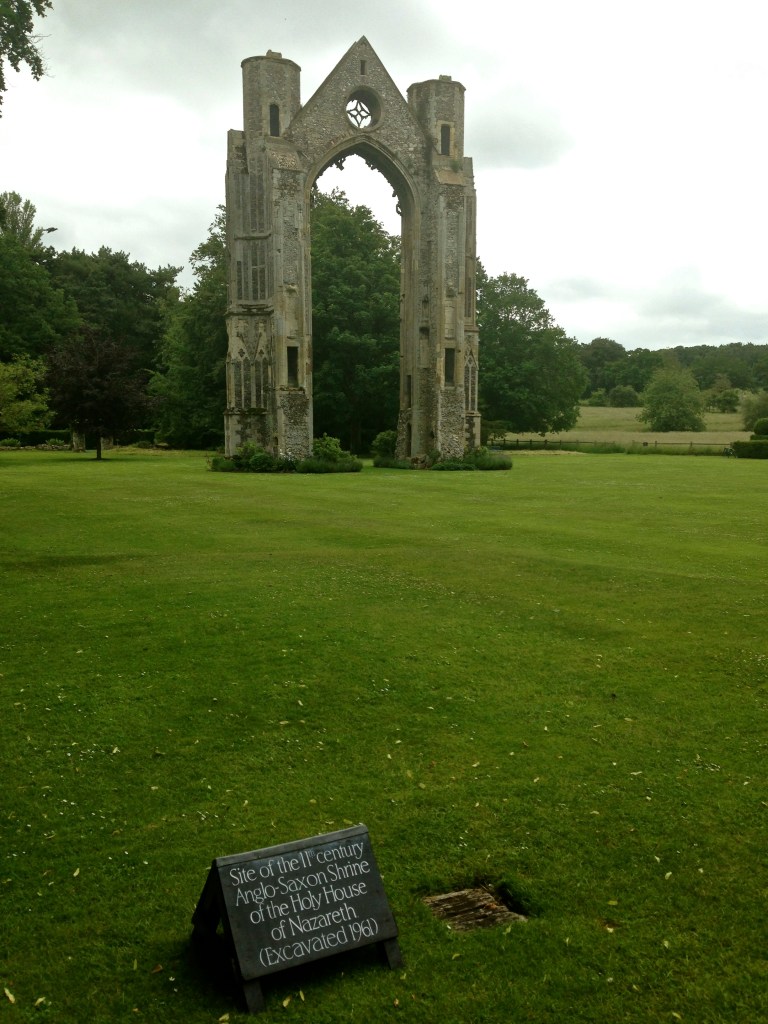
In 1061 Richeldis de Favarches, the Lady of the Manor of Walsingham Parva, prayed that she might undertake some special work to honour Mary. She was led in spirit to the site of the Holy House in Nazareth and instructed by Mary to build a replica in Walsingham. Richeldis built the first little chapel just 5 years before the Norman conquest and it was a site of medieval devotion to Mary for almost 500 years until it was ruthlessly destroyed during the Reformation in the 16th century.
The popular story is that the Holy House was built overnight by the good spirits in 1061. This divine assistance was provided after human builders experienced great difficulties in implementing Richeldis’ plan. There is testimony from the builders that no human hands could make such a perfect building, to precise specifications, in such a timeframe. Richeldis’ son, Geoffery, later established a priory adjacent to the Holy House and, for over 500 years, it was the focus of medieval devotion to Mary.
Royal patronage helped the shrine to grow in wealth and popularity, receiving visits from Henry III, Edward II, Edward III, Henry IV, Edward IV, Henry VII, Henry VIII and Erasmus. It was also a place of pilgrimage for English queens – Catherine of Aragon was a regular pilgrim and her successor, Anne Boleyn, also announced an intention of making a pilgrimage.
The suppression of the monasteries and the destruction of sacred objects was part of the English Reformation. This was the fate of the Holy House and the sacred objects located here – with temporally valuable items looted and spiritually valuable things, including the statute of Our Lady of Walsingham, and the buildings destroyed.
But it was impossible to suppress the memories of the site. After nearly four hundred years, pilgrimage to Walsingham again became a regular feature of Christian life in the United Kingdom and beyond. There are both Roman Catholic and Anglican shrines in Walsingham. In 1897 Pope Leo XIII re-established the restored 14th century Slipper Chapel as a Roman Catholic shrine, now the centre of the National Shrine of Our Lady of Walsingham. Father Alfred Hope Patten, the Anglican Vicar of Walsingham in 1921, ignited Anglican interest in the pre-Reformation pilgrimage. It was his idea to create a new statue of Our Lady of Walsingham based on the image depicted on the seal of the medieval priory. In 1938 that Anglican church was enlarged to form the Anglican Shrine of Our Lady of Walsingham based on the house at Loretto.
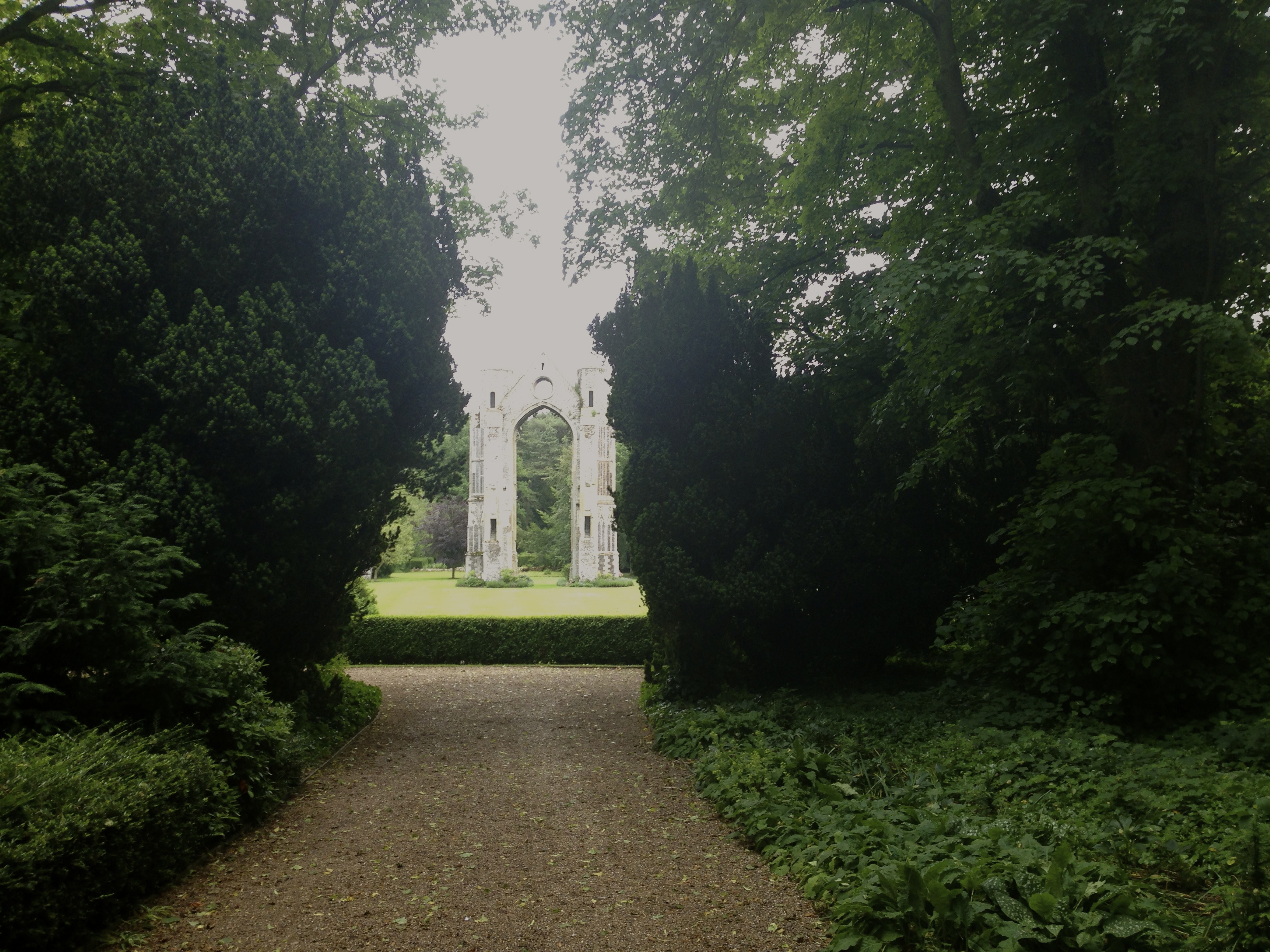
The energy at Walsingham is both powerful and sublime. There is a strong loving presence in both the Anglican and Catholic shrines, but the former Abbey grounds is also extraordinarily powerful and my photos were so filled with light that many look over-exposed. My sense is that the Abbey continues to exist in etheric and that the original site of the Holy House was in the Abbey grounds. Afterward reaching this conclusion I read that there is archeological evidence that this is so.
As for the miracles received by pilgrims to Walsingham, Bridget Curran’s lovely book, “The Miracles of Mary” has an excellent chapter on the site and it is one of my favourites.
Namaste.
© Paul McCarthy & Iluminar.au

