Seven Sleepers of Ephesus
The cave where seven young Christians slept for two centuries — a rare sacred site where Christianity and Islam share a miracle story, hidden in the hills above Ephesus. (3 min read)
Some go to Ephesus for the archeological site and for the love of ruins but my friend Jan and I have been called there by the Virgin Mary. I will write separately about Our Lady of Ephesus but in this note I want to share the miraculous story of the Seven Sleepers of Ephesus. The writing is not mine – it is a post by a person called Jacob on 365rosaries.blogspot.com.au.
“On July 27, we celebrate the feast day of the Seven Sleepers of Ephesus– Saints Maximian, Malchus, Martinian, Dionysius, John, Serapion, and Constantine—martyrs for the faith. As recorded in the Golden Legend, the story of the Seven Sleepers is one where good men fall asleep, only to wake up to a world changed for the better. Akin to the resurrection of the body, which we shall all experience on earth, the story of the seven sleepers is a foretaste of the glory of the Risen Christ. The Church’s martyrology describes the feast as the “Commemoration of the seven Holy Sleeper of Ephesus, who, it is recounted, after undergoing martyrdom, rest in peace, awaiting the day of resurrection.”
It was during the time of Christian persecution that our story unfolds. Emperor Decius (249-251) traveled to the town of Ephesus (in modern-day Turkey) to enforce his laws against Christians. In Ephesus, Decius found seven noble young men (depicted in art as beardless, and often in legend referred to as “boys”), named Maximian, Malchus, Martinian, Dionysius, John, Serapion, and Constantine. Each of these young noblemen had proclaimed the Christian faith, being baptized into it. Following a brief trial, Decius sentenced them to death, but gave them some time to consider changing their faiths. He declared that should they still be Christian upon his return to the town, they would be executed.
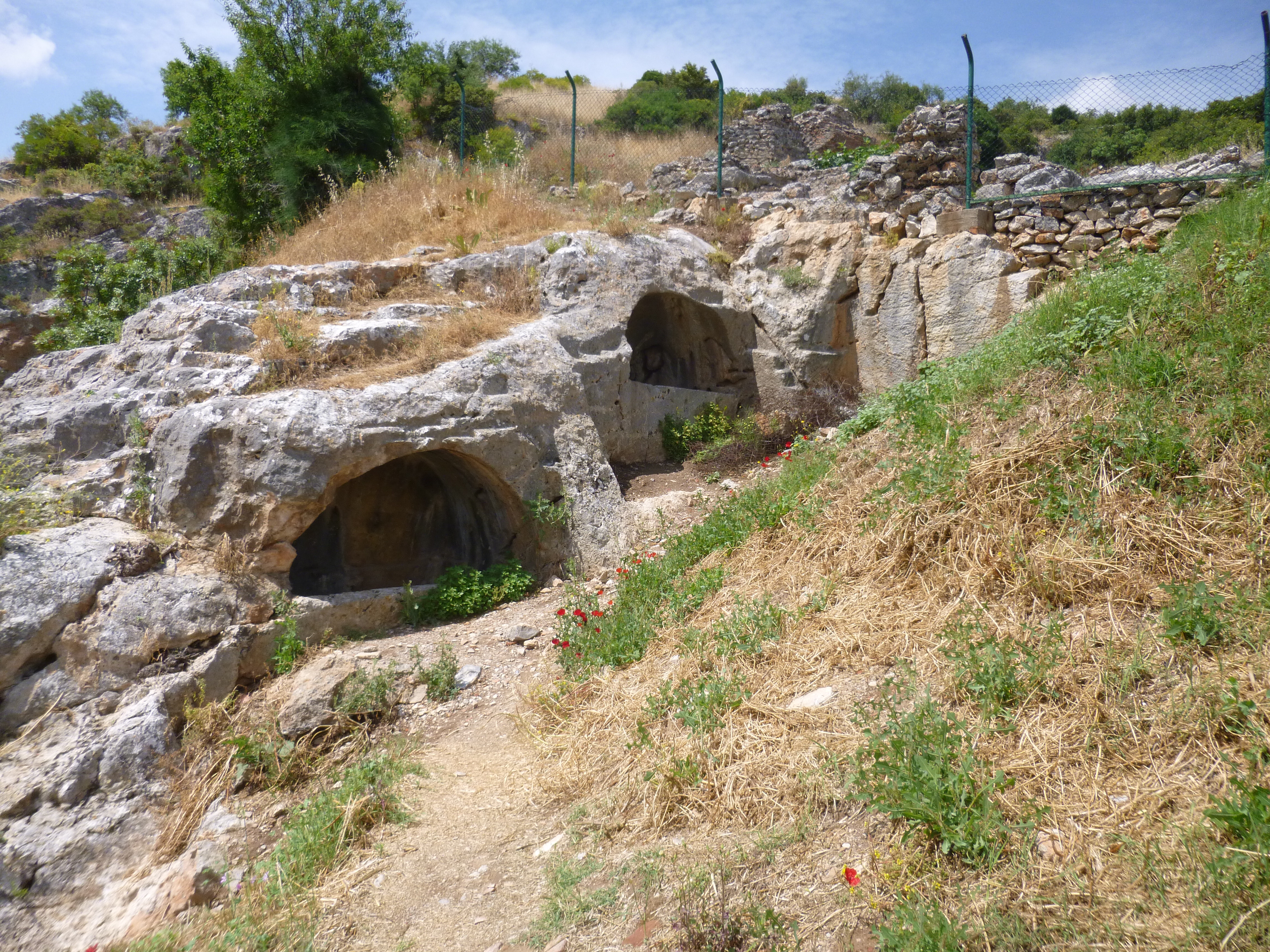
Following his departure, the young men held firm in their faith. They gave their property to the poor, and taking only a few coins with them traveled to a cave on Mount Anchilos to pray and prepare for death. There they lived in hermitude, contemplation, and holy prayer until the emperor returned to Ephesus. Upon his return, he asked their whereabouts, and upon his approach to their cave, the martyrs said their last prayer, giving themselves up, and falling asleep. Decius told his soldiers to find them, and when they were found asleep in the cave, he ordered it to be closed up with huge stones and sealed. Buried alive, and deprived of food and water, the seven became martyrs for the faith. Shortly thereafter, local Christians visited the sealed entrance to the cave, and wrote the names of the seven and their story on the cave wall for all to see. Their sacrifice became a living witness to the Christian faith.
Two centuries later, during the reign of Emperor Theodosius the Younger (408-450), persecution of Christians had ceased in Europe. In fact, Christianity was now the official faith of the empire. In is during this time that some heretics denied the resurrection of the body. While this controversy went on, a rich landowner named Adolios had the Sleepers’ cave opened, to use it as a cattle-stall. The seven youth awoke from their sleep, unaware that almost two hundred years had passed. Their bodies and clothing were completely undecayed. They discovered they were preserved when one went into the city to buy bread and heard the name of Jesus spoken freely, presenting an outdated coin with the image of Decius to buy bread. Bewildered he was taken to the Bishop of Ephesus who eventually spoke to all seven youths and discovered that God allowed this miracle to end the dispute concerning the resurrection of the dead. The Emperor also went to Ephesus to examine this miracle and after speaking with them they were allowed to go back into their cave without the royal honors the Emperor wanted to lavish on them, and there they fell asleep permanently. Overall it has been determined that the holy youths fell asleep in the cave in 250 and awoke in 434, which means that they slept for 184 years. Each year, their feast is celebrated in the cathedral built atop the cave. The cave in which their bodies were found became a place famous for devout pilgrimages, and is still shown to travelers.
The lives of the Seven Sleepers marks a true historical event. While the length of their sleep, and the eventual resurrection of their bodies is difficult to confirm, archeological remains indicate that seven young men were buried in the cave in question in Turkey—the tombs and relics remain, dated from the time period in which the miracles were said to have occurred. The lives of the Seven Sleepers are recorded in numerous sources, including the Koran.
The Seven Sleepers give us hope and confidence in the Lord. Whether historically accurate, or a more mystical metaphor for the joy of the resurrection, we look forward to the moment when our sleeping selves awaken to grace, and purified, and then rest in the Lord for all eternity!”
© Paul McCarthy & Iluminar.au

