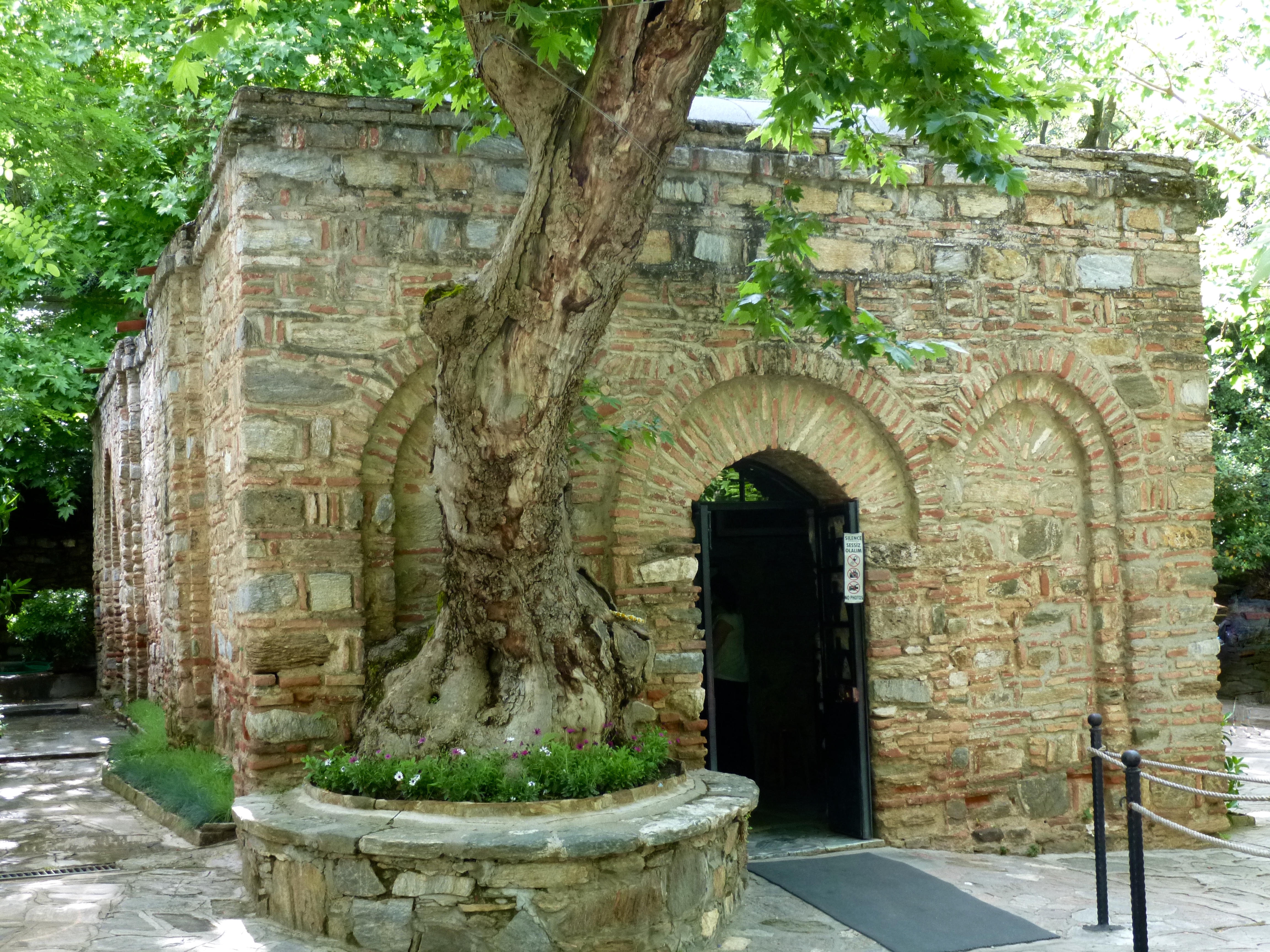
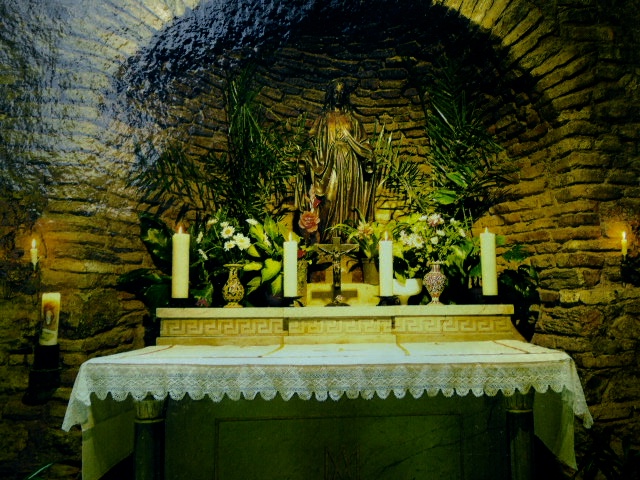
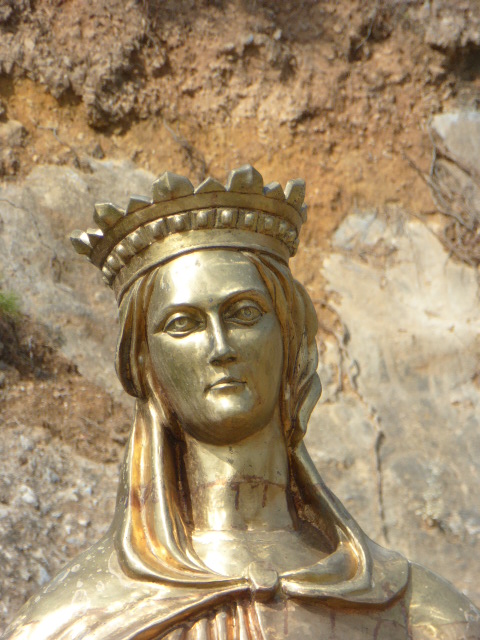
Mary’s house in Ephesus
Anne Catherine Emmerich described Mary’s house above Ephesus in exact detail — before it was found. A visit to the site that confirmed both her visions and something extraordinary. (5 min read)
When I was in Jerusalem in 2011 I visited the tomb of Mary near Gethsemane. The site was interesting but it did not hold any charge and I could not feel the presence of spirit there. Naively, I assumed the problem was with me, rather than the site.
But last year, as I started to plan another pilgrimage, extraordinary information starting coming to me which explained my experience in Jerusalem and, ultimately, exposed linkages to my other pilgrimages.
A visit to Ephesus was inevitable. Turkey has been calling me for 20 years. And after 3 years of visiting holy sites connected to the Virgin Mary, I could not resist an opportunity to visit Meryem Ana Evi – her “house” – in Ephesus… even though I knew nothing about it.
As I researched Mary’s connection with Ephesus, I was supported by the most wonderful stories of extraordinary mediumship and trust in connection to spirit. And, most helpfully, an acknowledgement of bridge that Mary provides between Christianity and Islam.
In the latter part of the 19th century there was a great interest in Spiritism, especially in western Europe. Humanity’s yearning for deeper understanding was being met by the benevolent spirits of light in new ways. There was a surge of interest in mediumship, seances and communication with the spirit world. The Theosophical Society was established in 1875. And, from 1857, Kardec’s work provided a rational framework for understanding the mystical. Mystical events, such as apparitions and spontaneous healing, were no longer simply matters of superstition or faith alone.
In 1880, a book on the life of the Virgin Mary, channeled by a German medium called Anne Catherine Emmerich (1771-1824), was published. Emmerich wrote about the “tomb” of Mary in Jerusalem that I visited. She said that the tomb was prepared but never used, although there were (incorrect) rumours circulating in Jerusalem that Mary had died and was buried there. Shazam!! The lack of charge in the tomb now made sense to me.
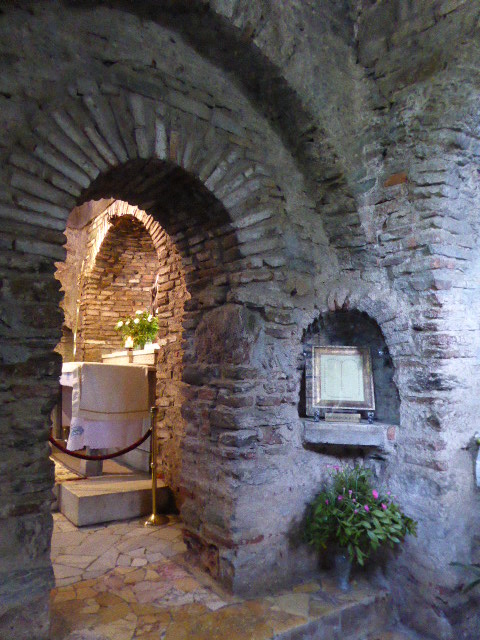
Emmerich’s book also described, in great detail, the nature and whereabouts of a house in Ephesus, Turkey where the Virgin Mary had lived and died. Emmerich described the details of the house: that it was built with rectangular stones, that the windows were high up near the flat roof and that it consisted of two parts with a hearth at the center of the house. She further described the location of the doors, the shape of the chimney, etc.
The response to Emmerich’s book was mixed, especially in religious circles. Some described it as fanciful while others, such as the French nun, Sister Marie de Mandat-Grancey (1831-1915), saw the truth in it.
Within 6 years of the publication of the Emmerich’s book, Sister Marie was transferred from France to the French Naval Hospital in Smyrna (now Izmir), Turkey. Now living less than 100km from the place described in Emmerich’s book, Sister Marie felt a deeper yearning to find Mary’s house.
Sister Marie was, in my view, also a mystic. She was guided to introduce two priests to Emmerich’s book with the intention of securing their assistance to discover the holy site. One of the priests was particularly resistant but ultimately converted to this mission due in part to spiritual intervention..
In 1891 the priests successfully used Emmerich’s book to find the holy house. The site and building matched Emmerich’s description very well, although some of the extraordinary details were not confirmed until the site was fully excavated many years later. The story of how the house was found and purchased is fascinating and filled with “coincidences” and anecdotes of spirit intervention.
Sister Marie, coming from a very wealthy French family, was able to direct her considerable financial resources to the purchase of the mountain on which Mary’s House stands and to fund the immense expenses related to restoration and maintenance of the site. As a Daughter of Charity (the order established by St Vincent de Paul and the same order as St Catherine Laboure who brought through the design of the Miraculous Medal in 1830), Sister Marie bequeathed the house to members of this spiritual lineage.
Until 1896, the site of Panaya- Kapulu, which translates to “Doorway of the Virgin”, was only known by a few Christian inhabitants of the village of Kirkindje, located in the mountains west of Ephesus. The most learned of travellers were completely ignorant of it. Now, about one million people visit Mary’s house each year.
The rediscovery of the Mary’s House inevitably led to questions about her story. I think it is logical to assume that Mary travelled to Ephesus with St John after the murder of Jesus. John was part of a new Christian community there and he died and is buried in Ephesus. Religious scholars seem to agree on this.
And is also logical to assume that Mary died in Ephesus, rather than Jerusalem. There are 3 good reasons for this:
- Locals and Greek Orthodox have pilgrimaged to the mountain of Mary’s house, on the feast of her death, for near two millenia.
- A second century building, the Church of the Virgin Mary, was the site of the third Ecumenical Council in 431AD (this was the Council that proclaimed her divine motherhood). In the early days of Christianity, a church was only dedicated to a person if he or she had died in that place.
- Early Biblical scholars who were experts on Jerusalem, such as St Jerome, made no mention of Mary’s tomb in Israel.
Four years after the discovery of Mary’s house in Ephesus, the Pope removed the plenary indulgence for Mary’s tomb in Jerusalem for all time. In 1951, he declared Mary’s House an official sanctuary for pilgrims and ten years later granted a plenary indulgence for all pilgrims to the house for all time.
In Mary’s House, Muslims and Christians pray side by side in peace as they honour Mary. In fact, there are more Muslim than Christian visitors to the shrine. Muslims love Mary – she is the only woman mentioned by name in the Koran and is written about 35 times. She is held up as an example for all women and is honoured for her immaculate conception and her virgin birth. In these times of religious tension threatening world peace, how awesome that Mary’s home is a point of common ground between different faiths.
The mediums at the centre of the story of Mary’s House have now been recognised by the Vatican.
Anne Catherine Emmerich
In 2004 Anne Catherine Emmerich was beatified, however, the Vatican made it clear that the church’s judgment was based on her personal life and sanctity and not at all on her writings.
Emmerich was clearly a mystic. She was drawn to deep prayer from an early age, she regularly experienced visions in which she felt herself talking directly with Jesus and she was also a stigmatic. She lived with a debilitating illness, spending much of her adult life bedridden and in persistent pain, and she offered her suffering in union with that borne by Jesus. Those who were sick regularly asked for her prayers.
Mel Gibson has said that he based much of his film, “The Passion of the Christ,” on the visions of Sister Emmerich as reported by the poet Clemens Brentano in a book called “The Dolorous Passion of Our Lord Jesus Christ According to the Meditations of Anne Catherine Emmerich.”
Marie de Mandat-Grancey
In September 2014, the cause for the beatification and canonisation of Sister Marie de Mandat Grancey was presented to the Vatican. This little movie gives a brief summary of her life: http://www.youtube.com/watch?v=t2tbHc6jbf4
Jan and I will visit Ephesus in May 2015 – one hundred years after the death of Sister Marie on 31 May. We hope to visit her grave in the public cemetery. If you are fiho de casa and would like to join us then send me a message.
If you cannot join us in Turkey you may wish to visit one of several replicas of Mary’s House in various places around the world: Jamaica, Vermont; Buenos Aires, Argentina; Medjugorje, Bosnia Herzegovina; Natividade, Brasil and Eindhoven, The Netherlands.
And if you are in France, consider visiting Chateau Grancey in Burgundy near Dijon (http://travelcuriousoften.com/january13-feature.php). This is Sr Marie’s family home and it houses two original first century stones from Mary’s House in Ephesus. Inside the walls of the castle is also the Church of St John the Evangelist. How interesting that young Marie’s family church was dedicated to St John (although first dedicated to the Virgin Mary)!
Namaste.
© Paul McCarthy & Iluminar.au

