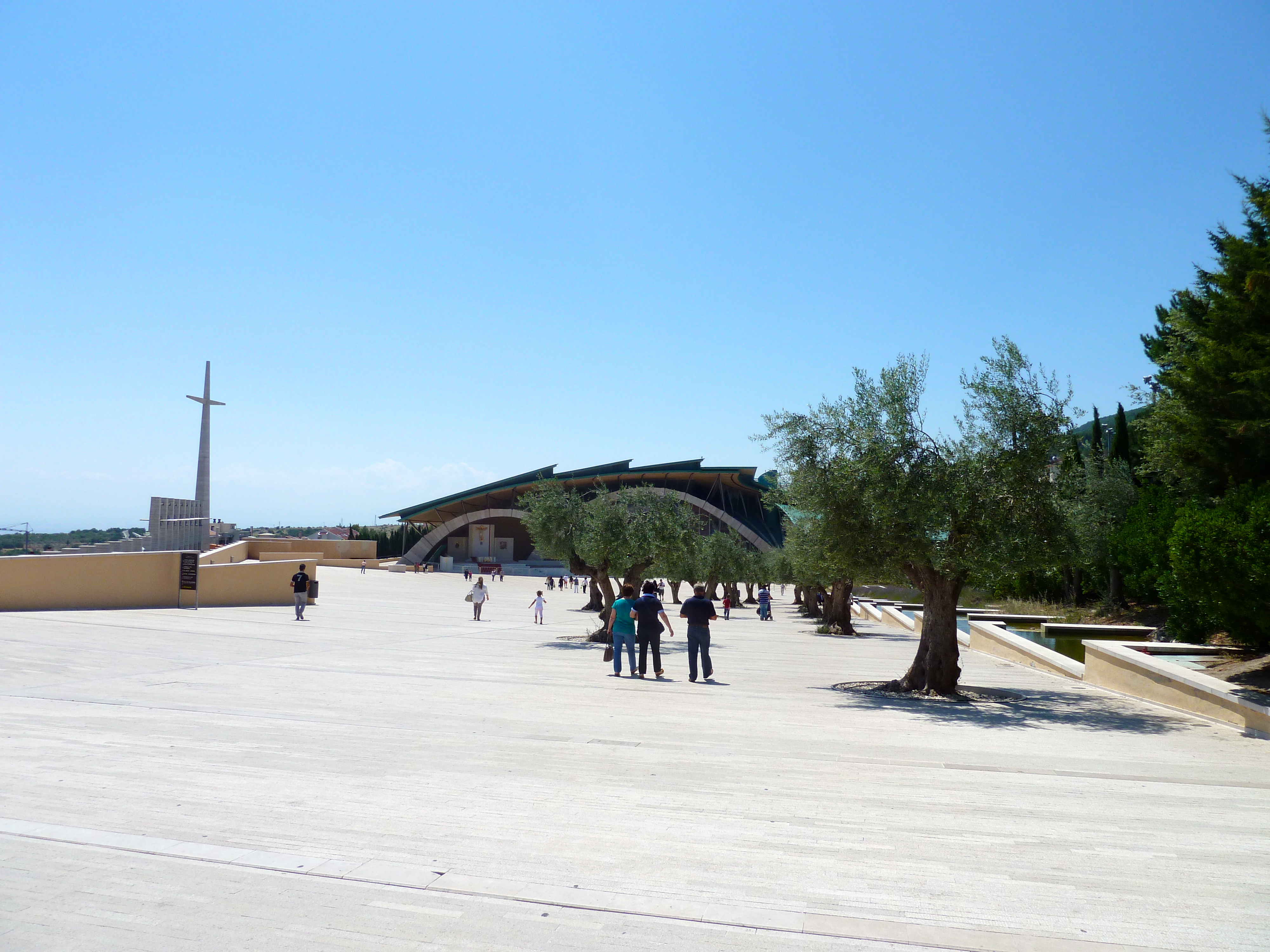
The intense light of San Giovanni Rotondo
Padre Pio’s home — the incorrupt body in Enzo Piano’s extraordinary basilica, the orbs in the photographs, and the overwhelming energy of a saint still very much at work. (3 min read)
The light is intensely white here and, but for the mount on which the town and St Pio’s shrine is located, the land is flat as far as the eye can see – all the way to the Adriatic Sea. Farm land mostly. And wind harvesting on the other side of the hill.
Getting here is relatively straight-forward for Italy, though neither the train nor bus timetable can be relived upon. It is possible to visit and return to Rome in one (very long) day.
The first thing that is surprising is the size of San Giovanni Rotondo. I was expecting something like Abadiania. But it is much larger, and quite prosperous looking and quaint.
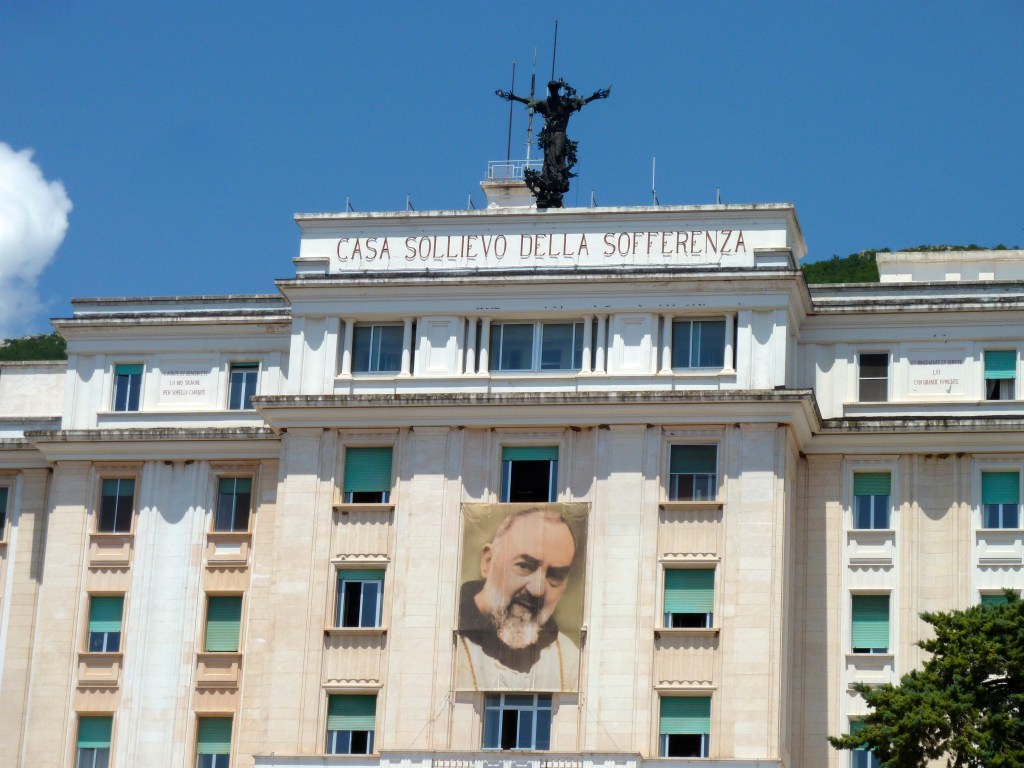
On alighting the bus, the first thing one sees is the Home for the Relief of Suffering – the hospital established by Padre Pio. There is a lovely large photograph of him on the front of it. The hospital looks pretty big, which means there must be need in the area.
When Pio was sent to San Giovanni Rotondo, this was the oldest, poorest and most remote of the Capuchine houses. The cult of Pio has transformed that. It is disappointing to see so much tourist tat on the streets but, fortunately, no one was selling relics as far as I could tell.
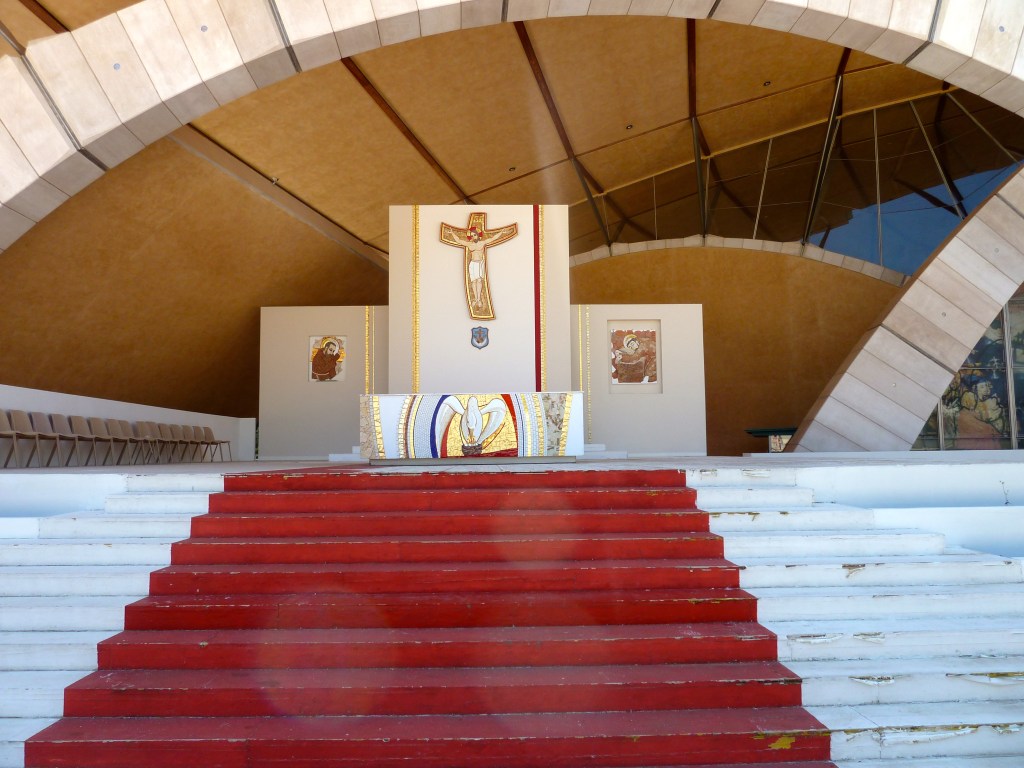
There are 3 churches here – the old church, from Pio’s day; the new church (which is late 20th century) and the Basilica of St Pio. For me, the old church has the least charge. The new church, with the original crypt (and Pio’s burial site) and lovely mosaics (including one of Mother Teresa of Calcutta) had a strong energy, particularly when I prayed the Ave Maria. However, the basilica, designed by Enzo Piano, is superb – physically striking, modern, practical and the most beautiful crypt I have ever been in.
St Pio’s body has been on display in the crypt in the basilica since June 2013. What a blessing to be able to see this – and there were very few pilgrims on the day I visited, so it was a mostly serene and easy experience. I very much felt the presence of the good spirits in the crypt where Pio’s body is now venerated, although it saddened me that some people were more focused on their photographs than their prayers. Let’s hope they are taking them to share the miracles with others… but the whole experience feels a bit like a contemporary equivalent of the way the crowds would attack Padre Pio’s clothing for relics when he was alive.
There is a small museum in the old church at San Giovanni Rotondo. It has Pio’s cell, some of his confessionals and some personal memorabilia and relics. The documentation of his case for beatification (about 2 metres worth of books) is also on display. As one cannot put anything on the glass coffin that contains Pio’s body, I was greatly blessed to be able to put my rosaries on the reliquary in the museum. This experience involved a strong energetic transfer to the beads.
The hills behind San Giovanni Rotondo are largely covered with pines and conifers. The air smells lovely here. There is a beautiful “way of the cross” (with the stations of the cross) on the hillside behind the churches. Pio laid the first stone for this “way” just before his death and it was very important project to him. The final concept has been beautifully executed. I left a crystal here.
© Paul McCarthy & Iluminar.au
 iluminar.blog