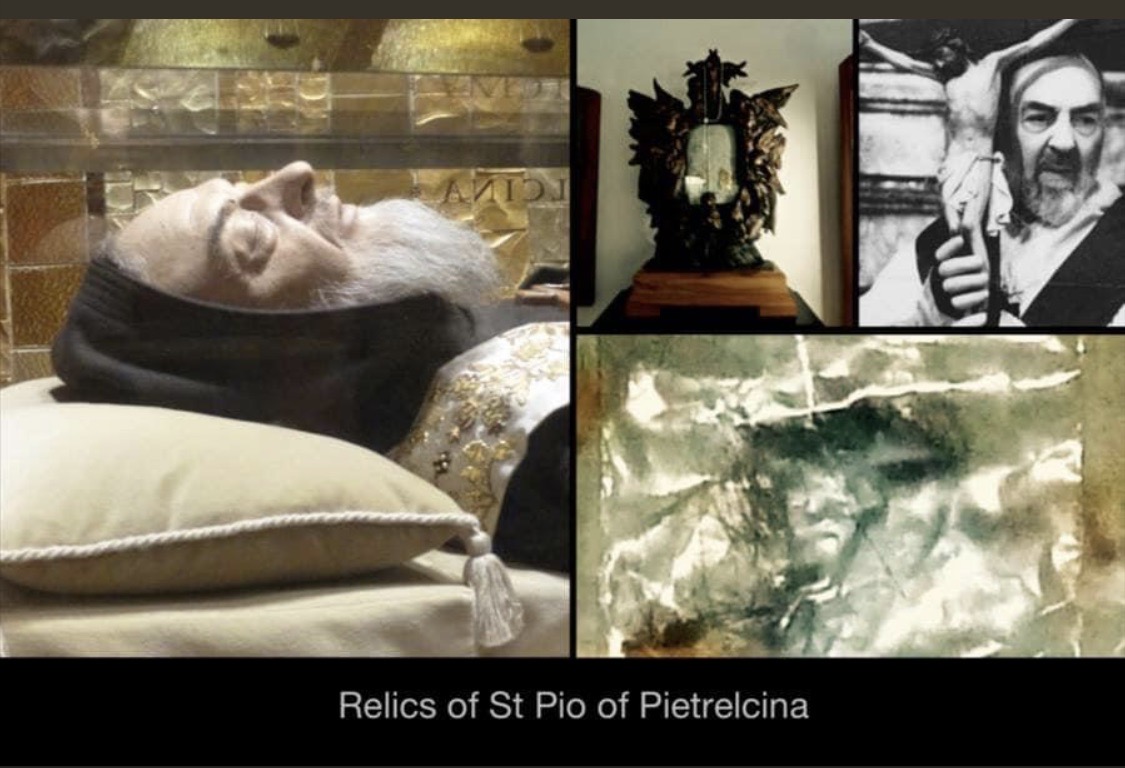
“After my death I will do more”
Padre Pio’s life, stigmata, miracles and his promise that his real mission would begin after his death. (3 min read)
Francesco Forgione, or Padre Pio (1887-1968), was born into a devout but poor family in Pietrelcina, Italy in the late 19th century. At the age of 16, he entered into a Capuchine novitiate, with his seminary education paid for by the hard work of his parents. In 1910, he was ordained and assumed the name Padre Pio.
After 6 years in his home town, Pio was posted to Our Lady of Grace in San Giovanni Rotondo – one of of the poorest, oldest and most remote of the Capuchine houses. He lived in this small town until his death in 1968. Following his canonisation in 2002, St Pio’s shrine receives over 7 million pilgrims a year.
There are thousands of testimonies to the intercession of Padre Pio (or more correctly St Pio of Pietrelcina) either during his lifetime or after his death. Often called “the greatest mystic of the twentieth century”, it is not surprising that Pio has been present at the Casa Dom Inacio.
Pio experienced ecstacies and apparitions from the age of 5. His other psychic gifts included prophecy, reading hearts (especially during confession), bilocation and the emission of an extraordinarily beautiful perfume. His masses, and more particularly the energy channelled during communion, were legendary and attracted huge numbers of pilgrims.
Most famously, Pio received the stigmata – the crucifixion wounds of Jesus – on his hands, feet and side, in 1918. He also received the pain of the crown of thorns and the shoulder wound of Jesus. The sacred wounds, including the one on on his side (which was 2.5 inches long and 1 inch wide), continually oozed blood or bloody fluid. The slightest touch to these wounds caused Pio immense pain which, he said, was “so acute as to absolutely undescribeable and inconceiveable”. The supernatural character of these wounds cannot be disputed and Pio’s doctor once observed luminous rays of light emanating from the side wound.
But Pio was also subject to demonic attacks throughout his life and, terrestrially, he experienced years of severe and unjust treatment by the Roman Catholic Church and the world’s media. Although the Pope later exonerated him, Pio faced a degree of public doubt and suspicion for the rest of his life. He also had to cope with appalling behaviour from overly zealous pilgrims, including people cutting his habit and chord for relics.
Pio experienced several prolonged and debilitating illnesses throughout his life (severe headaches, dizziness, asthma, intestinal trouble, chest pains, pulmonary infections, back pain, bronchitis, respiratory illness and extreme fevers).
He also experienced many years of spiritual aridity and worry that his life was not pleasing to God. Lacking insight into his own pure soul, he never presumed his salvation.
Yet, Pio understood the transcendent value of suffering: “If humanity could realise the value of suffering, they would ask for nothing else… my sufferings are more precious to me than gold… Jesus wants my sufferings, he needs them for souls”.
Padre Pio found great consolation in his devotion to Mary and, in particular, Our Lady of Pompeii. His favourite prayer was the rosary and he insisted his spiritual children carry a rosary with them at all times and pray it every day. And when asked what inheritance Pio wanted to leave his spiritual children, he replied “the rosary… a weapon against evil in the world”. Pio promised “After my death I will do more. My real mission will begin after my death”.
I visited Padre Pio’s shrine in July 2013 and left a crystal in the grounds of the shrine. Much of the information above was sourced from “Pray, Hope and Dont Worry” by Diane Allen – a beautiful book of stories from people who knew Padre Pio.
Namaste.
© Paul McCarthy & Iluminar.au

