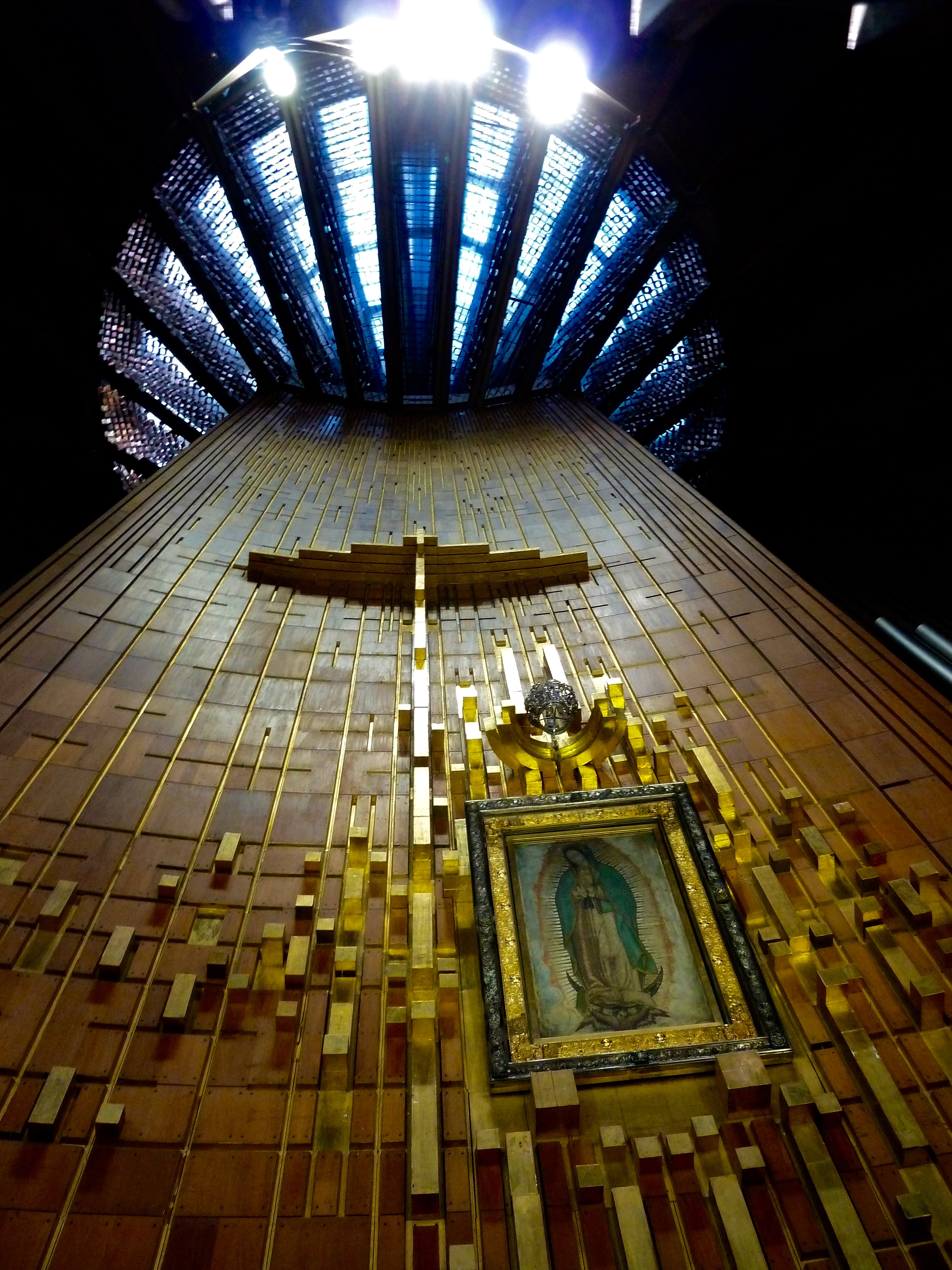
Meeting the Virgin of Guadalupe
The tilma of Juan Diego, the miraculous image of Our Lady of Guadalupe in Mexico City — and the tears that came without warning. (6 min read)
When I was in Cusco, Peru last year I got a very strong message that I needed to go to Mexico. This was totally out of the blue, unexpected and apparently unaffordable. Why was I needed in Mexico or what did I need in Mexico? As I loved Cusco, my lower mind assumed some connection with the Spanish evangelists or even an Atlantean connection, but Spirit soon came in and directed me to the story of the Virgin of Guadalupe. And then resources about the sacred artefact came to me from various directions. And I knew it was the Virgin Mary calling me to Mexico.
The story of the Virgin of Guadalupe
In December 1531, a poor man called Juan Diego, received 3 visits from the Virgin Mary. She asked him to tell the bishop that she desired a chapel to be built at a particular location. Juan Diego tried but was unable to convince the bishop who asked for a sign from Mary.
In response, Mary directed Juan Diego to get some roses growing on the mountain nearby (important plot point: roses had not yet been introduced to Mexico and, in any case, it was winter when roses do not bloom). Mary told him to gather the roses in his cloak (called a “tilma”) and to show them only to the bishop.
When Juan Diego unfolded his cloak to show the roses to the bishop they fell to the floor but there was an image of the Virgin Mary imprinted on the tilma.
This sign was accepted as a miracle and work commenced soon after on a chapel Mary requested.
There are many other interesting elements to this story. The name “Guadalupe” came from Mary (via Juan Diego’s uncle who was cured by her) not the Spanish (even though there is a town by this name in Spain with a Marian connection). The Virgin is “half-cast” on the tilma stimulating the conversion of many, many natives as it reconciled two disparate cultures.
Recent investigations of the image of the Virgin of Guadalupe
There is a great documentary that collates the scientific research that has been done on the tilma over the years. There is no evidence that it was painted. And despite being almost 500 years old, it is intact and the colours are vibrant, even though the ordinary life-expectancy of these garments is 10 to 20 years. There is rich detail in the work – when viewed under a microscope, the eyes contain distinct images of Juan Diego, the bishop and others who were present when the image was revealed (contemporaneous art works confirms the likenesses), astronomers have confirmed that the pattern of the stars on the Virgin’s cloak mirrors the stars above Mexico on the night of the final apparition (12 December 1531), and the shape of the flower pattern on the garment reflects the topography of Mexico (mountains, etc).
Venerating the image
The tilma is kept in a dedicated basilica in Mexico City – the most visited Christian pilgrimage site in the world.
On the day I visited, many pilgrims were present; mostly poor people from the countryside who had ridden by horse over several days to pray to Mary – either to thank her for her intercessions or to ask for help. When a prayer is answered, these people walk on their knees from the basilica’s forecourt to the tilma. This devotion brings up very strong emotions and it was such a blessing to witness.
The basilica is modern and was funded by contributions from the countries of the Americas. It is an amazing architectural achievement. The tilma has pride of place above the main altar. There is a void below the altar which permits pilgrims to see the garment from below at any time. To manage the crowds there are people movers. It is an ugly but efficient arrangement and the reason why I have so many pictures of the tilma.
I said prayers to Mary for the people of Mexico (past and present) as well as all connected with the Casa Dom Inacio. I took it as a sign that this prayer was answered when I walked into the gift shop and picked up a holy medal of the image of the Virgin of Guadalupe and flipped it over to see an image of St Ignatius of Loyola.
Namaste
© Paul McCarthy & Iluminar.au

