Meditation & Healing: A Spiritist perspective
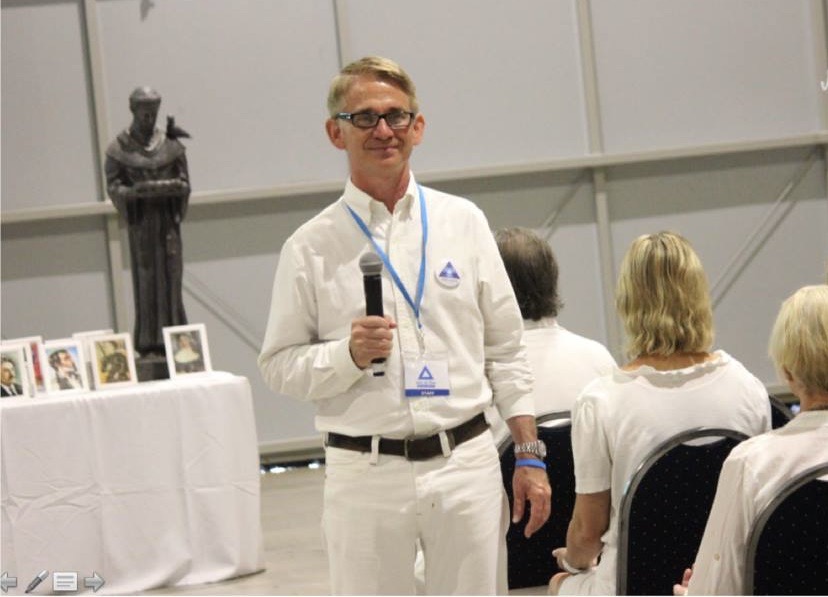
Paul McCarthy has been a meditator since 1998 and has been facilitating meditation and healing in the Spiritist tradition since 2010. This post traces the practice behind his meditation training sessions and crystal light treatments — and what it means to approach healing with humility, prayer, and disciplined presence. (5 min read)
Meditation, as most people understand it, is framed as training attention: quieting the mind, observing thoughts without getting swept away, and returning again and again to a chosen anchor. Many people also experience practical benefits—calmer emotions, clearer focus, less reactivity, and a greater sense of inner steadiness.
Contemplation is different. Contemplation is reflective investigation: bringing thought slowly and deliberately toward a question, a teaching, or a lived experience in order to understand it more deeply.
In my experience, contemplation can help illuminate meaning, while meditation trains the inner conditions—stillness, receptivity, and awareness—so that insight can land and be integrated.
In the Spiritist (Kardecist) tradition I have studied and practised in Brasil and at home, meditation is also devotional. It isn’t about emptying the mind for its own sake. It’s a disciplined posture of alignment—quieting oneself, praying, invoking good spirits in accordance with divine will, and maintaining an ethical intention of charity and service. Healing, in this framework, is not something a meditator or facilitator controls or manufactures. It is work carried out by good spirits, under God’s direction, in accordance with the intentions and needs of the person being helped. Our role in Spiritist meditation is to become a stable instrument: to settle, regulate attention and breath, stay non-attached to outcomes, and cooperate with whatever assistance is appropriate.
While anchored in Christian Spiritism, my meditation practice has been shaped by many threads. I have been a meditator since 1998 and in the Spiritist tradition since 2008. I began teaching and facilitating meditation in 2010.
I began my meditation training by learning to quieten the mind and observe thoughts at a holistic health retreat on the Gold Coast, and I integrated that inner discipline into my meditation. I also practised conscious connected breathing, which taught me to breathe deeply and deliberately—and later I found that deep, regulated breathing supported the inner conditions that I associate with Spiritist healing work. Vipassana then strengthened my ability to sit still for long periods and to observe body and mind with clarity. Sound healing sessions, both in person and through recordings, taught me to surrender gently into guidance while still maintaining disciplined listening and presence. Theosophy added another layer of devotional structure for me: I learned alignment through the Great Invocation and offering myself for service to humanity through the cosmic masters of correction. Reiki training further informed my understanding of energy as something that can be approached with care and compassion, and it developed my ability to channel for healing in a grounded way.
From 1998 to the present, pilgrimage has also been a major influence in my approach. I have journeyed to holy sites in Christian, Muslim, and other traditions. Each pilgrimage included meditation and prayer—sometimes seeking intercession of the spirits of that place for myself and others, and sometimes calling on my “team of spirits” to cleanse an area of dense energy. In those places, I applied the same meditation method: stillness, prayerful intention, and disciplined receptivity—carried by gratitude and service.
Over time, these influences clarified an important distinction in my own practice: prayer and meditation are not competing practices for me—they are complementary. Prayer is the direction of intention and the devotional act of calling on divine help and good spirits. Meditation is the regulation of receptivity: settling the body, quieting the mind, aligning breath and attention, and maintaining the inner posture of service without striving or expectation. In Spiritist work, prayer “sets the purpose,” while meditation “holds the channel.”
My personal practice reflects that synthesis. I meditate daily for at least twenty minutes, using the same core method I use when I have clients. I align myself, invoke the good spirits, and “clean” myself and the house energetically—asking to be an instrument of assistance so that those in need may receive help in divine order. In this practice, I ask spirits to assist as I attempt to be a perfect instrument, and I experience the work as both spiritual and disciplined. I do this in the same two special spots in my house.
In the Spiritist sense, what matters most is humility and non-attachment. I do not claim credit, and I do not presume to achieve outcomes with my meditation practice. I open and close the practice with prayers, always holding the understanding that healing unfolds according to divine will and the spiritual path of the person concerned.
When people come to me for healing or guidance, I keep the same essential practice. I have them remain in another room and they are not privy to what I’m doing. This work mirrors my personal routine: settling, prayer, invocation, inward alignment, and energetic regulation as guided by my own intuition and the spiritual assistance that is available. Occasionally, when appropriate, I intuit additional guidance related to what the client needs, and I pray that helpful spirits support the work in that moment.
Because integration is part of the service, I don’t end with the inner work alone. After the client has had their treatment, I ask them to sit in front of me and we do a brief (two-minute) guided meditation where I instruct them in connecting and closing. This serves two purposes: it supports their integration, and it allows me to check that they are safe and have completed the closing steps. The same structure applies whether I’m alone or working with a client, and I generally keep eyes closed during the process.
Overall, my approach is an ethical and devotional synthesis: Spiritism provides the moral and spiritual framework—charity, humility, prayerful invocation, and healing under divine will—while meditation training supplies the disciplined inner conditions that allow receptivity to stabilize. Prayer sets the direction; meditation holds the steadiness. Service, non-attachment, and careful closure are the through-lines that make the practice coherent across group meditation, private healing, and my own pilgrimage-based devotion.
If you would like to book a meditation training session or crystal light healing session with me, visit https://iluminar-coogeebeach.square.site/. I have also written a protocol for practitioners based on my approach which is a separate blog post (linked below).
You might also like:
→ Spiritist Meditation Protocol
© Paul McCarthy & Iluminar.au

