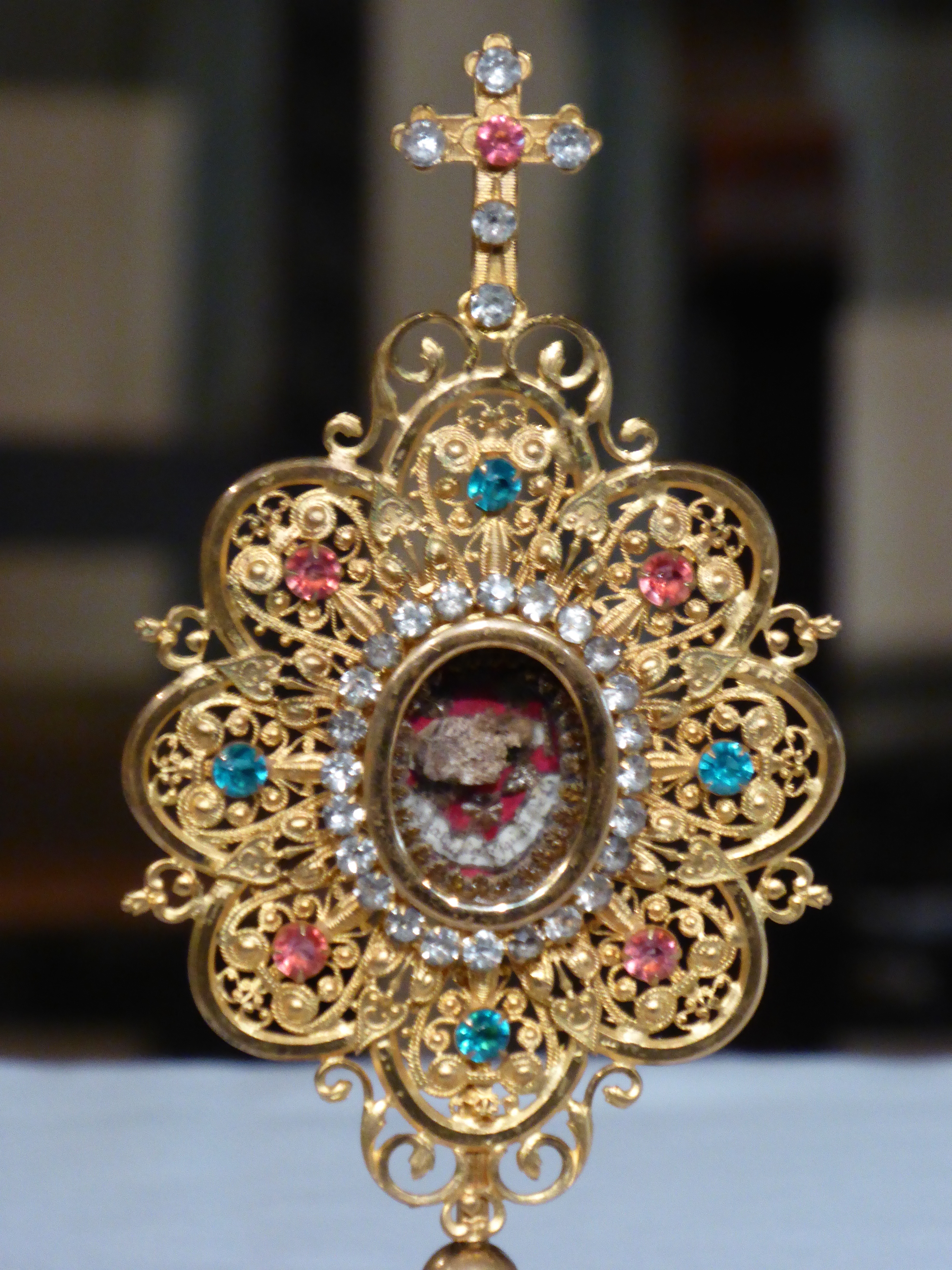
Bones and holy dust – relics of the saints
Bones, skin and holy dust — the relics of the saints once drew millions of medieval pilgrims across Europe, and they still draw me. Here is why relic veneration is not morbid superstition but a living, cross-religious practice that can be genuinely transformative — and how to approach it with discernment. (5 min read)
Relics – even talking about relics – can make people nervous. So let’s clear the air.
To prepare for my first major pilgrimage in 2011, I started reading about the lives of the saints and particularly their miracles. Many of the miracles related to the relics of the saints – “bones, skin and holy dust”.
I acknowledge that it is unusual to be interested in the mortal remains of the saints – their bones, skin and dust. Once I was repelled by the thought of it.
But my distaste, and even horror, was transformed in the presence of some of extraordinary relics. I eventually realised that second class relics, such as objects used by the saints, are no different to the momentos we keep of loved ones who have passed on.
The veneration of relics is practised by many of the world’s great religions – Christianity, Islam and Buddhism. It is not just “a Catholic thing”. Veneration, not worship, is the concept here. It is an act of respect and a prayer for the intercession of a deceased holy person; a request for their help from the other side of the veil. It is not worship of old bits of dead bodies.
Saints, relics and pilgrimage were important ingredients in medieval Catholicism. These matters were also central to the reformation and the establishment of various protestant churches (which were, to a greater or lesser degree, against saints, relics and holy pictures and statues).
In the middle ages, many Catholics pilgrimaged to places with holy relics. Jerusalem, Rome, Canterbury and Santiago de Compostela were very popular, but if a person could not travel that far, they would pilgrimage to a shrine closer to home. The act of pilgrimage was believed to help the pilgrim (or the person they represented) get to heaven quicker. And ordinary people believed that holy relics could heal them. Many miracles were reported which, even today, cannot be explained by science.
Many people have made their livelihood from pilgrimage and the competition for pilgrims led to many false claims about relics, especially during the Medieval period. John Calvin famously said that if all the relics of the “True Cross” in all the churches of medieval Europe were combined, there would be enough wood to fill a ship. He was wrong. A recent scientific study that measured the weight of each artefact purportedly from the cross concludes the combined weight would be only a fraction of the mass required to make up a cross capable of supporting the weight of Jesus.
There is no doubt that many pious and faithful people were deceived by fake relics during the medieval period. I think that, unconsciously, some people still feel the hurt caused by these medieval fraudsters and, as a consequence, hold a deep suspicion of the provenance of all relics.
I always approach relics with discernment. I judge the authenticity of the relic or holy place by what I feel. And I am often surprised. I was deeply disappointed to feel nothing when I went out of my way to visit the relics of St John the Baptist in Wadi Natrun in Egypt. But I was brought to tears by the intense, loving energy of the incorrupt body of St Rita in Cascia. I found Mary’s House in Ephesus to be pulsing with divine light but the Holy House in Loreto and Mary’s tomb in the Kidron Valley felt empty. When I visited the shrine of St Bernadette Soubirous in Nevers, I was compelled to pray the rosary, only to discover years later that the rosary was central to this saint’s story. If I do not feel much, I trust that the particular saint or holy place is simply not for me.
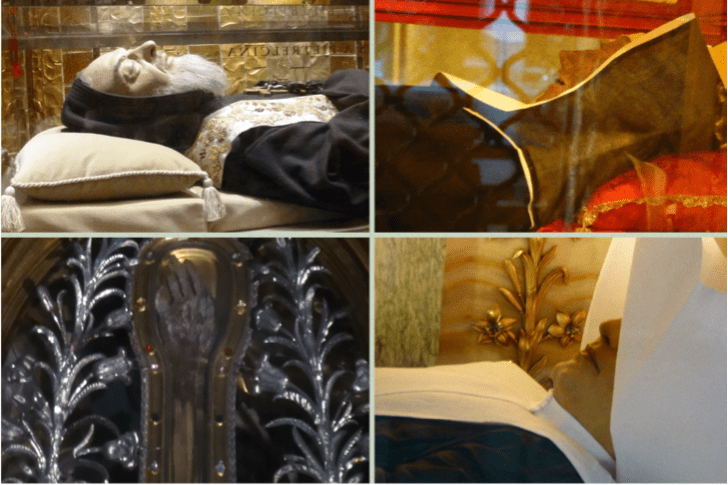
Before I started pilgrimage I had never heard of an “incorruptible” saint – a holy person whose body does not decompose after death. There is no scientific or medical explanation for this phenomenon and seeing the remains of such saints is paradigm shifting. God, or the supernatural, is obviously at work.
The energy around the relics of incorrupt saints is strong and I have no doubt that huge graces are given to those who pilgrimage to their shrines. The standouts for me are St Rita of Cascia (Cascia, Italy), St Catherine Laboure (Paris, France), St Bernadette Soubirous (Nevers, France), St Catherine of Bologna (Bologna, Italy), Padre Pio (San Giovanni Rotondo, Italy) and, of course, St Francis Xavier (Goa, India).
I do not presume to fully understand what occurs when one venerates a holy relic or visits a sacred place. But my belief is that the saint concerned or spirits representing them are present at this time to help the pilgrims. Those beings elevate the vibration of the place and they intercede or intervene for the pilgrim. Although my language is modern, the phenomenon I am describing, to this point, is consistent with the beliefs of our medieval kin.
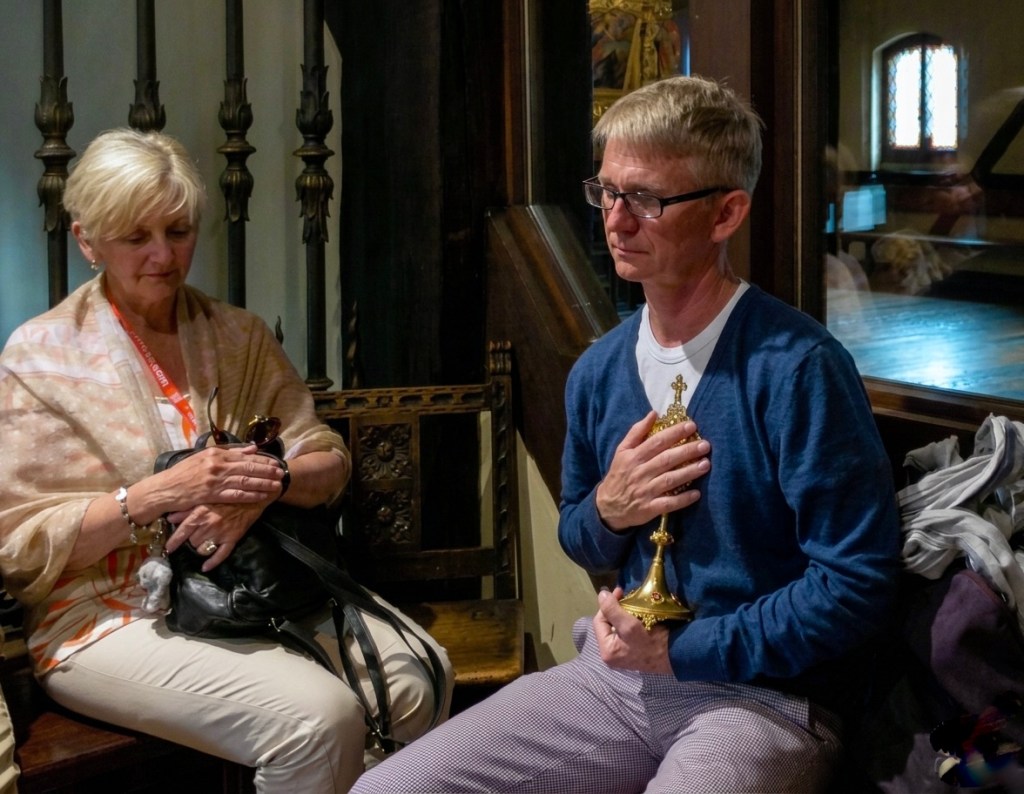
However, it is also my experience that relics carry an energy of themselves and that often this is palpable. I think that when we touch a relic we have a deeper experience of that energy.
And if we touch a relic with a quartz crystal, for example, we may be able to keep a little of the energy. I believe this is why centuries of pilgrims have felt compelled to touch relics with their rosaries and holy medals. But not everyone agrees on this.
I have often heard Roman Catholic religious say that the relics have no energy or power in themselves – that they are merely symbolic. On this point, I disagree. I believe that the high vibration around relics and the miracles come from the presence and intercession of the superior spirits but also from the energy of the relic itself.
The Church’s position on relics is, literally, medieval. The Council of Trent (1545-1563), a flagship for the counter-reformation, specifically addressed this issue and the Church’s position is little different today. The Council defended invoking the prayers of the saints and venerating their relics and burial places. The Council also condemned superstitious practices and sale of relics and it introduced checks on saint-making. The Council reaffirmed that relics and images are only those means through which the saints can be reached or commemorated, and not the instruments of miracles themselves.
I have no doubt that a lot of medieval pilgrims visited shrines in search of a miracle. And while saints are synonymous with miracles (at least two are required for canonisation in the modern era), they are more important to us as examples of how to live a holy life.
I have visited some shrines many times. Each shrine, like each saint, is different. And each visit to a shrine develops and deepens one’s connection to the saint who is honoured there. Of course, some experiences are life-changing. I will never forget the instant recognition of the face of St Vincent de Paul (his life-like relic is in a glass coffin above the high altar of a church in Paris) or the opportunity to do the reading during a mass in the chapel where St Ignatius had his conversion experience in Loyola Castle. I wish everyone could see the incorrupt body of St Francis Xavier in Goa, India and St Juan Diego’s tilma (the cloak made of agave fibre on which the miraculous image of Mary is imprinted) in the Basilica of the Virgin of Guadalupe outside Mexico City.
The shrines dedicated to Mary are very special and miracles are common there. I have been to shrines in Lourdes, Fatima, Medjugorje, Knock, Walsingham, Montserrat, Loreto, Ephesus, Turin and numerous other places. Apart from Guadalupe, my favourite Marian site is in Poland. The Pauline Monastery of Jasna Gora in Częstochowa is home to the famous icon of the Black Madonna (believed by many to have been painted by St Luke). Unlike most Marian sites, there is little commerce in Jasna Gora and the focus is entirely upon prayer. Without commerce, the energy of this shrine is intense.
So bringing all of this together, I can say with absolute certainty that the veneration of relics is an upright, worthy endeavour that can bring us closer to the saints, inspire moral reform and, God willing, lead to miracles. But deep discernment is recommended. And ask for guidance from your favourite saints, guides and angels.
Namaste.
© Paul McCarthy & Iluminar.au

