My first time in Siena
First impressions of Siena — medieval brickwork, a guided tour with the remarkable Anna Piperato, a Eucharistic miracle still unexplained after 300 years, and an evening in Catherine’s neighbourhood chapel. (5 min read)
I am happy to be leaving Perugia. The bus to Siena was late leaving and when I finally got here the escalators from the train to historical centre were not working, so I had to get a cab. What a great thing cabs are for travellers – so much simpler than lugging suitcases long distance!
My first impressions of Siena were very positive. Medieval, “Siena Red” brickwork, intact city walls and historic buildings and lots of pedestrian friendly streets.
Enroute to lunch I saw a sign for the Church of San Francesco and knew I had to go there to put that part of my pilgrimage behind me. The church is huge, has no pews and poor lighting… but it also has beautiful marble work and stained glass and paintings which, according to the signs, provide a great overview of Sienese art (the lack of lighting made this hard to verify). The church is somewhat famous because of a Eucharistic miracle dating to 1730 and still recognised (some consecrated hosts were stolen, found a few days later and have not decomposed or shown any signs of corruption according to investigations in 1914 and 2014). the hosts were on display and for the second time I had the sensation of all sound being blocked as I prayed I’m front of them.
My visit to Siena was inspired, in part, by a YouTube video about Saint Catherine by Anna Piperato – https://www.youtube.com/watch?v=NUPv0Dzw2Ss
I met Anna for a tour about Saint Catherine at 4pm. What a beautiful, light-filled being she is. I sensed she is part of Catherine’s phalange and she was very open in explaining the various “coincidences” involving Catherine that led to and kept her in Siena.
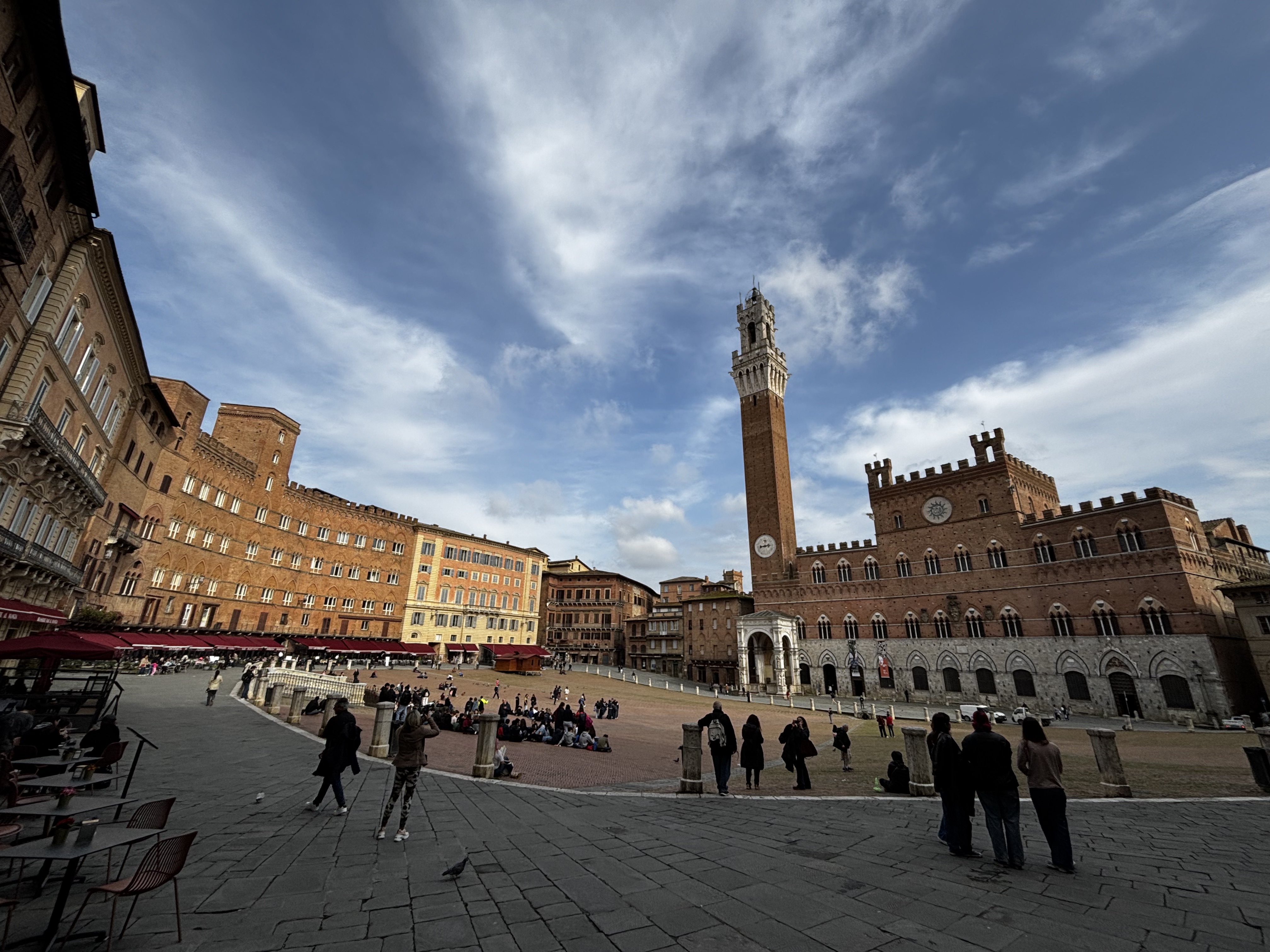
We began the tour in the Campo which, Anna said, would have looked very similar in Catherine’s day, noting the reference to Catherine on a plaque on plaque in the city hall connecting the city to Rome.
From there we walked to the pilgrim hospital and talked about Siena’s importance on the pilgrim route (being safer than the ocean route and therefore attracting merchants as well as pilgrims). Apparently the hospital was the oldest in the world until it closed a few years back. It began by offering hospitality for pilgrims, as well as care of the sick but the role expanded to include other businesses. The hospital grew a lot over time. Anna recommended I visit part of the complex dedicated to Saint Catherine.
Anna argued that Sienese cuisine was influenced by spices etc that came this way (including the ingredients of Panforte) because of the protection on the pilgrim route.
We walked past the baptistery and duomo and then to the site where Catherine saw an apparition of Jesus (in papal robes!) over the Church of San Domenico. Her family home was in the shadow of this church and is now a place dedicated to her (as well as the clubhouse of the neighbourhood contrato).
We visited the chapel in the clubhouse (it helps to have local contacts) and then briefly some of the other rooms.
We finished at the church of St Catherine and had a nice chat about spirits and spirituality.
Anna did not want to charge but I insisted on paying. Such a beautiful experience.
© Paul McCarthy & Iluminar.au

