Nailing the poverty of St Francis of Assisi to the cross
St Francis | Assisi | Italy | Pilgrimage | Sacred Travel | Spirituality
24 September 2016
A meditation on St Francis of Assisi and the spirituality of poverty — inspired by Gerard Thomas Straub’s book ‘The Loneliness and Longing of Saint Francis’. Written ahead of a meditation event in Perth on the feast of St Francis. (5 min read)
Next Saturday I will be in Perth leading a meditation on the feast of St Francis of Assisi. Several hundred people participated in a similar event in 2015. The meditation will be guided in the Spiritist tradition of Brasil.
I have been preparing, energetically and practically, for this event for several months and I am certain it will be perfect. There is great capacity for transformation and insight for individual participants and the collective.
Leading up to last year’s meditation, I created a series of video-clips about the life of St Francis to help participants with their preparation. These are still available on YouTube. I have also responded to the interest in a Spiritist perspective on Francis’ life by creating a small book and I will put it out there soon.
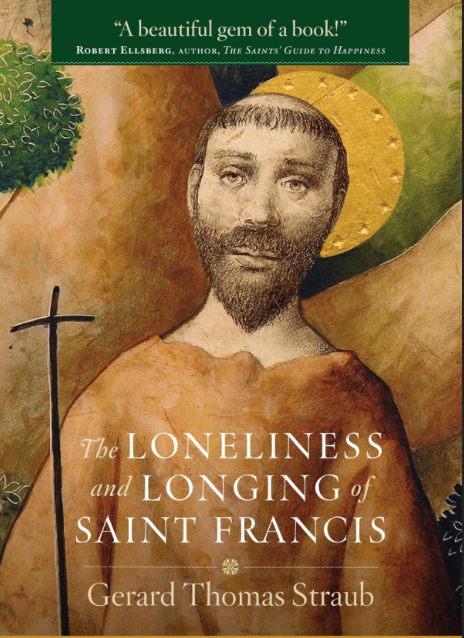
Very recently, a most interesting book called “The Loneliness and Longing of Saint Francis” came to my attention. The author, Gerard Thomas Straub, confesses that he wrote the book in order to fall in love with Francis again. About 12 years ago Straub wrote a 600 page book about the saint. He says that his admiration and understanding of Francis has deepened since then and that he felt compelled to boil down the essence of the saint’s spirituality to something simpler for readers. I love, love, love this book!
Staub generously describes his own transformation from being an atheist chasing “Brother BMW” to a Franciscan tertiary chasing “Lady Poverty”. He says he went from being a successful Hollywood producer to an independent film maker committed to telling stories of the world’s poorest people after a spiritual experience in Assisi.
The book weaves Straub’s personal experiences and reflections with a narrative on key aspects of Francis’ life. However, the particular focus is poverty and prayer.
Straub argues that mystics have always seen poverty as a key to spiritual wealth, because without resources one must rely totally upon God. He says that Francis’ concept of poverty was interconnected with his concept of God and the gifting of Jesus to the world. Voluntary poverty was the way for Francis to always be dependent on God for everything.
Straub is well placed to speak about poverty. He has made 18 films about the experience of the poor around the world in Asia, Central and South America and the USA. He describes this work as “an intense immersion into the hidden world of suffering. Over and over again, I saw Christ nailed to the cross by our inexplicable indifference and apathy. But as I walked down poverty road, I slowly learned about the kind of radical dependency on God that Francis of Assisi relied upon”.
Straub tells it like it is: “Jesus is not looking for us to give the poor our spare change; he is asking us to give our very lives. The radical message of Jesus clearly indicates that consuming more than we need is actually stealing from those in need… Jesus never treated people as beggars. Instead, he entered into solidarity with the vulnerable… Jesus shows us that charity is not just about giving, but requires the giver and receiver to become engaged in a human partnership of human dignity…”
He also provides a beautiful explanation of what it means to be poor of spirit and argues: “The cross symbolises the extremity of helplessness more than the extremity of suffering. The cross rejects power and accepts surrender. When we have little or no worldly power to rely on, we are able to offer unambiguous love and service”.
Requesting help for the poor is a priority at our meditation events – we pray that the Good Spirits will use our energy to help them in accord with their prayers. But we also encourage action and donations to the needy.
I very much like what Straub has to say about prayer:
“At its essence, prayer isn’t about asking for divine favours. The primary purpose of prayer is to assist us in continual abandonment to God. Prayer stimulates a mindfulness of God, which in turn stimulates acts of love and mercy.
For Francis, prayer was the breath of life. Prayer was the simplest, most direct way for the saint to acknowledge his dependency on God for everything. Prayer enabled Francis to become more aware of God’s presence, a presence that was at once far beyond him and deep within him. Prayer was Francis’ safest haven, and he devoted himself to long periods of intense prayer, sometimes throughout the night. He sought out solitary places where he could enter into communion with God. For Francis, silence was the language of God; and he knew the importance of being still and resting in God. Fully half his converted life was spent in contemplation and prayer.”
This is a shameless plug for this book. But you don’t need to read it to get a lot out of our meditation event. Just come and pray with us.
Namaste.
© Paul McCarthy & Iluminar.au

