Pilgrimage Stop: Padova
A day in Padova — St Anthony’s basilica, the world’s oldest botanical garden, and the jewel-box Scrovegni Chapel painted by Giotto. (2 min read)
Padova is about an hour north of Bologna by train and 30 minutes south of Venice. I’ve spent a day here, principally to visit the basilica of St Anthony.
Anthony was born in Lisbon in 1195 to a wealthy family. He was ordained as a priest in an Augustinian order at a young age (changing his name from Fernando). He converted to the Franciscan Order after 5 friars were martyred in Morocco. Anthony also sought martyrdom but ended up in Italy. He made his way to Assisi where he met Francis and became one of his most famous friars. Anthony was very learned but Francis was cautious of book learning. He found a soulmate in Anthony and permitted him to teach theology to the friars.
Anthony was an extraordinary preacher and a miracle worker. For these reasons it is not surprising that his tongue, vocal chords and jaw bone did not decompose after this death. In fact, the relics of these parts are on display in a special chapel in the Basilica. There are relics of other saints and of the crucifixion cross in this chapel and the energy is very nice.
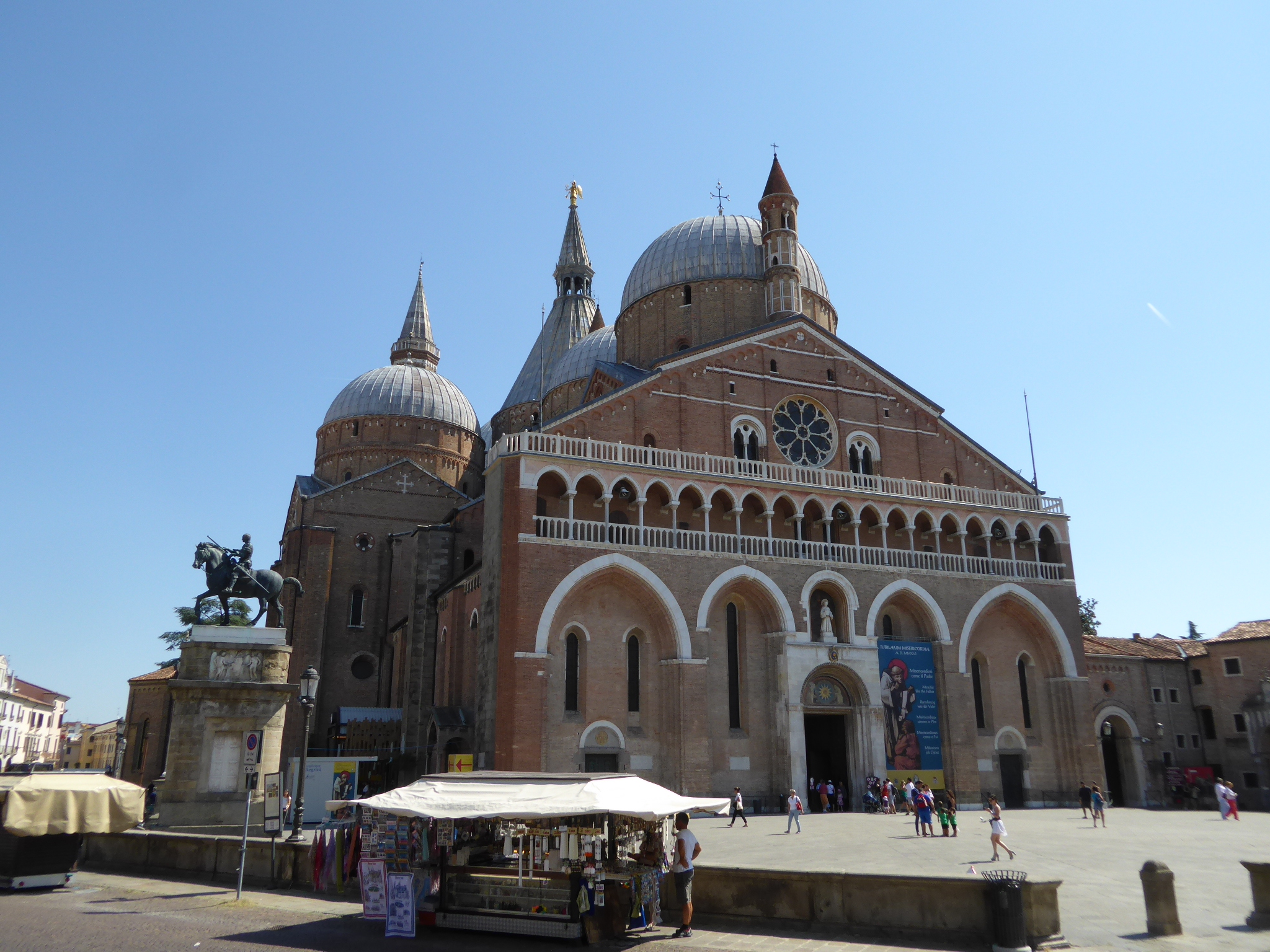
The Basilica of St Anthony is huge and a testament to the great love ordinary people had for this great saint. It is painted in the medieval style of the Basilica of St Francis in Assisi (with several frescos by Giotto) but seems ever grander. Despite its size, it is warm and inviting and filled with pilgrims. Anthony’s tomb is a huge marble affair with great carvings and gold detailing. Pilgrims can touch the tomb and place their rosaries on it. If the number of ex votives are anything to go by, many visitors get their miracles through the intercession of this saint. I spent several hours at this church and in the cloister and loved every minute of it.
Not far the basilica is the Botanical Garden of Padova. It is the world’s oldest university garden and was founded so that students could research medicinal plants. As Monte Don says, it has great order about it. What is especially interesting is the 21st century greenhouses. These are solar and water powered and very cleverly combine the experience of Kew Gardens with a science centre. The moment I went inside I thought that it would help people to love the earth more – it smelled great and each section had the climate to support plants from a different part of the globe. My body knew I was in the Australian section before my mind realised. Truly great work being done here.
The other “must have” experience in Padova is the Scrovegni Chapel – an intact church painted by Giotto over a period of less than 3 years. The frescos are in varying states of preservation but it is a spectacular jewel-box type of experience. For generations the State has been working to address various conservation issues arising from changes in the environment. Just like with Leonardo’s “Last Supper” in Milan, the visitors must first sit in a climate controlled space before entering the chapel. Unlike Milan, photographs are permitted… but I only had my iPhone so my pics are rather ordinary.
Entry to the Scrovengni Chapel includes an opportunity to visit the adjacent museum which, on my visit, was filled with religious art.
Overall, I’ve had a very worthwhile day in Padova. For cost reasons, I had contemplated staying here and commuting to Venice but I’m glad we decided against this. Padova is in need of renewal and does not have the charm of Bologna or Venice. Just like Buenos Aires and Naples, there is truly spectacular architecture in need of restoration and investment.
Namaste.
© Paul McCarthy & Iluminar.au

