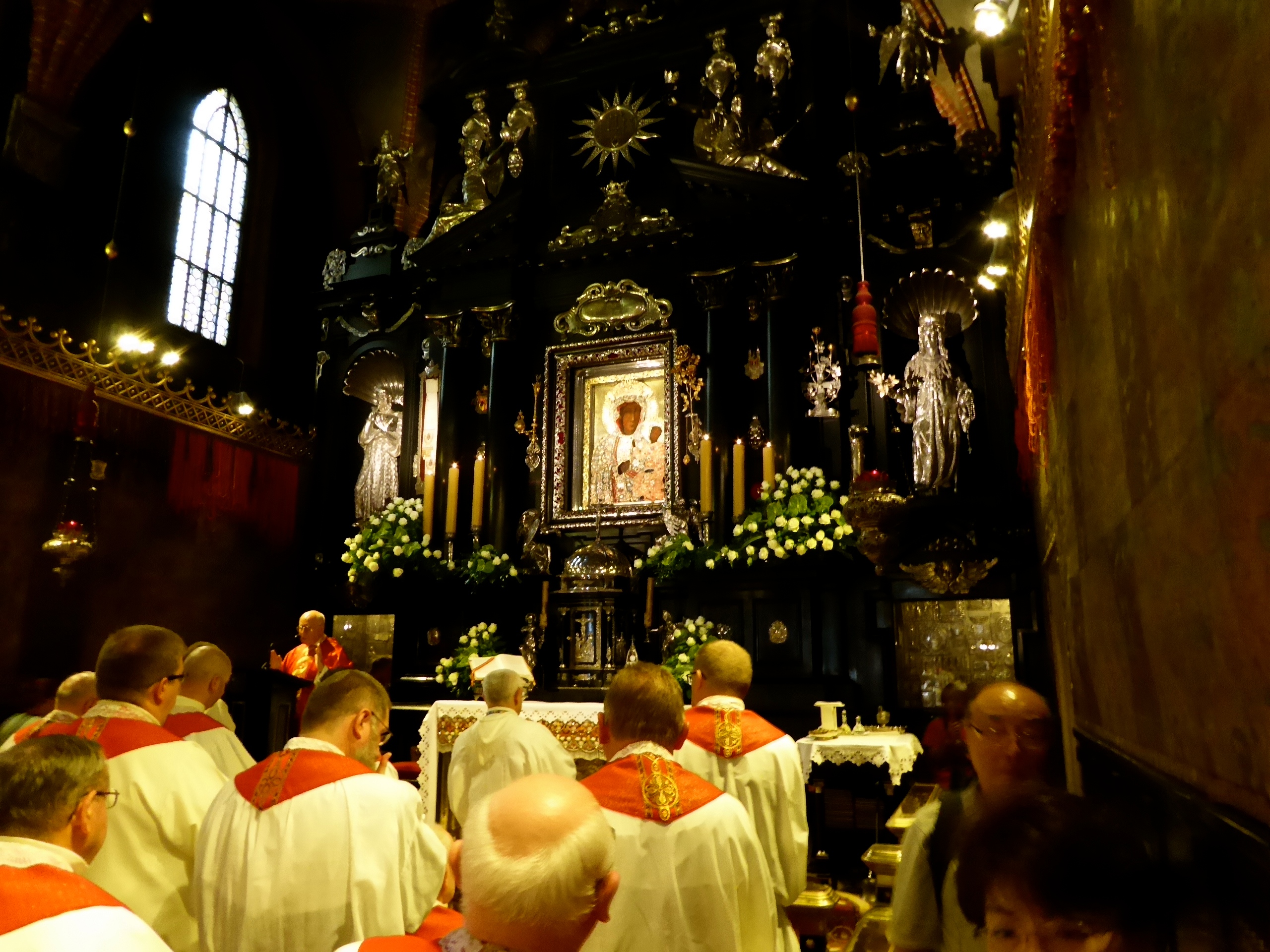
Shrine of Our Lady of Czestochowa in Jasna Gora, Poland
The Black Madonna of Jasna Gora — why this sacred image carries the highest energy of any Marian shrine visited, and what that tells us. (3 min read)
In the last few years I have visited many sacred sites connected with the Virgin Mary but, totally unexpectedly, the Shrine of Our Lady of Czestochowa at Jasna Gora in Poland has the highest energy of all. I felt a strong loving presence at Fatima, Lourdes, Medjugorje, Walsingham, Knock, rue du Bac, Pompeii, Turin and Guadalupe but the energy at this one exceeded them all. Of course, it is difficult to know whether this is my personal experience and the work I’m doing or if it is the site itself. The experience left me with no doubt that science will some day catch up with what some know to be true – that this sacred image of Mary was painted from life by St Luke, probably on something made by Jesus.
Jasna Gora is the holiest place of Poland and one of the world’s most important destinations for pilgrims. The Jasna Gora (Bright Mount in Polish) sanctuary in Czestochowa, is about ninety minutes’ drive northwest from Krakow. It has been Central Europe’s spiritual hub for six centuries and every year several million pilgrims visit. There are many miracles attributed to Mary’s intercession by visitors to the shrine and the walls are covered with offerings of thanksgiving for answered prayers. Masses are said all day long and there is a very efficient pathway for pilgrims to file past the image during the service (with locals doing it on their knees).
This is an extract from the flyer from the Shrine:
“The image… having dimensions of 121.8 x 81.3 cm… represents monumental and dignified iconographic structure of a Bizantine Hodigitria, the one who points to way to salvation. She is a Guide, leading the entire humanity to Jesus Christ.
According to the legendary tradition… the image was supposed to be taken from Ruthenia by a Polish Prince. After he founded the Yasna Gora Monastery in 1382, he entrusted the icon to the care of the 16 Pauline monks who had arrived from Hungary (see my note on the Cave Church in Budapest to see the unexpected connection here). The image was created most likely in the second half of the 13th century as the Balkan Icon. It was painted with tempera on a canvas, which was attached to the surface of the three lime tree boards, with nimbi carved in them around the heads of the figures.
In the years 1430-1434 the icon was subject of an extensive renovation in Krakow. It took place after the robbery and assault on Jasna Gora, which was most likely committed by the Hussit Iconoclasts from Bohemia. At that time, the fill in of the painting has been completed as well as some formal transformations, which gave the image characteristics of gothic art. The image in the present form is a unique example of a harmonious combination of Bizantine art of the East with the Latin culture of the west.
Four diagonal slashes crossing each other, which are visible on the right cheek of the Blessed Mother, are real cuts made by a sharp tool. They are gradually deepening in the layers of the paint, going as far as injuring the background. Two longer slashes, on the face and on the neck, were pointed out by being painted with vermillion as blood scars in order to commemorate a sacrilege done in 1430.
The heroic defense of Jasna Gora in 1655 during the Swedish invasion became a very important event in the history of Poland. In the spirit of thanksgiving for saving the painting, the monastery and the entire country, the King appointed the Mother of Jasna Gora the Queen of the Polish Crown…”
I am sorry to say that my photographs of this icon do not do it justice. In my defense, the line moves rather quickly and it is somewhat unsettling to be taking photos of this sacred image while people are having mass. But perhaps this note will inspire you to experience it for yourself.
Namaste
© Paul McCarthy & Iluminar.au

