FOR SALE: One of the seven wonders of the world
Chichen Itza — extraordinary, touristy and technically for sale — a wry account of Mexico’s most famous ancient site. (5 min read)
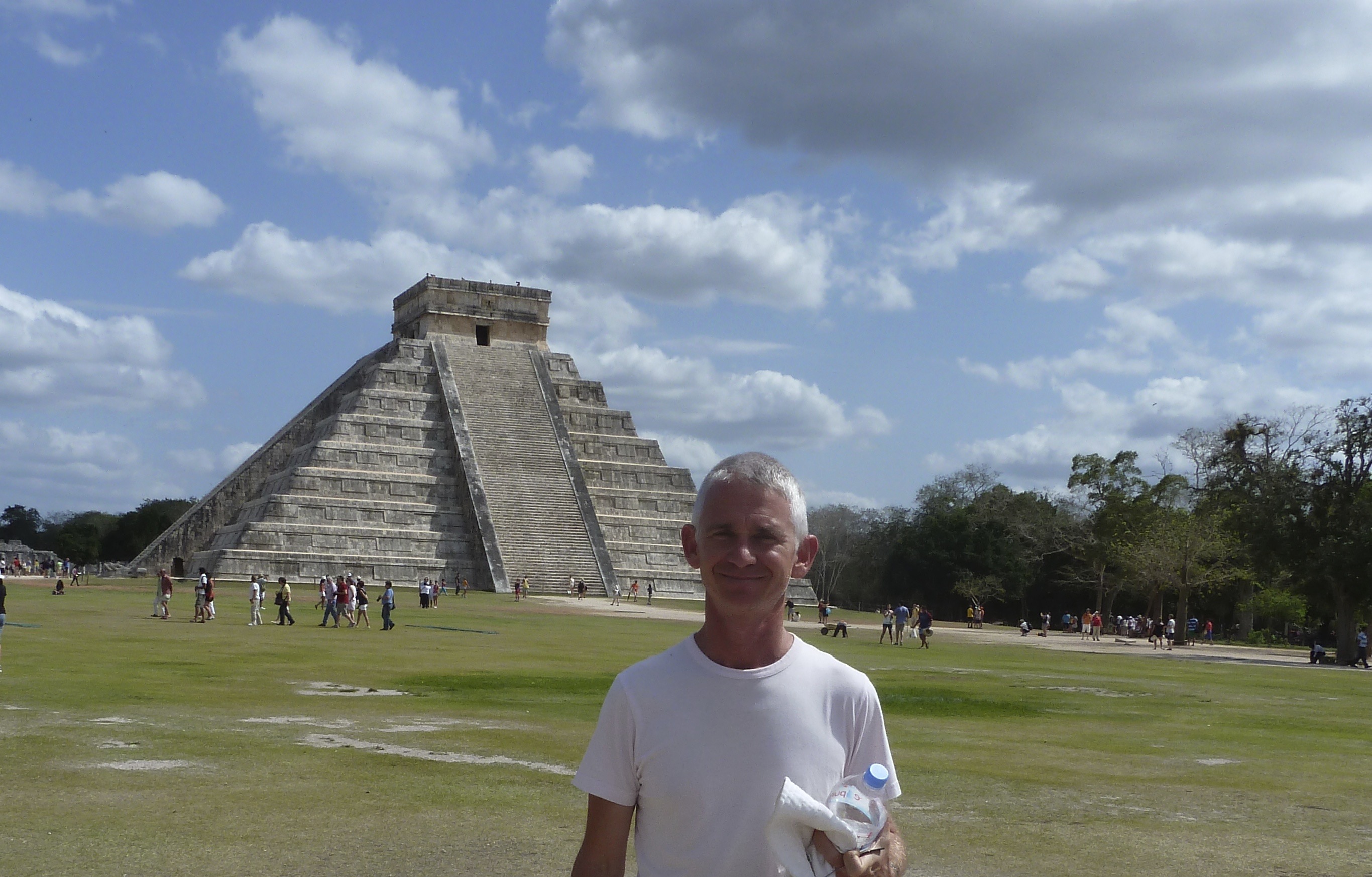
Today I visited Chichen Itza, the most famous site in Mexico (and probably the Mayan world). Chichen Itza is one of seven new wonders of the world (along with the Machu Pichu, the Great Wall of China, the Collesium, the Christ the Redeemer statute in Rio de Janiero, the Taj Mahal and Petra).
The Chichen Itza site is quite large and has several important buildings dating from about 800 AD until the late 10th century. The most famous is the pyramid (or “El Castillo”). It really is quite marvelous and I wish I was visiting on the equinox to see the shadow image of a serpent ascending or descending the building.
To protect this historical site, the ruins are cordoned off. For me this feels a bit too much like television – I can see it, and it looks real, but I cant touch it! I understand and respect the reasons for this, but I prefer the way the Egyptians and the Peruvians approach it – access is provided, unless there is a good reason to restrict it.
Energetically, the Chichen Itza site felt very flat to me, but with two exceptions.
The first is the sacred cenote which gives the site its name. This area had quite a charge, but it was also the place where human sacrifices were made (primarily children and opposing soldiers). Foreigners have looted the cenote, including of human remains. I left a Casa crystal here with the intention of honouring the ancestors and connecting them with the good spirits.
The second part of the site that got my interest, unexpectedly, is called “Gran Juego de Pelota” or the Great Ball Court. It is the largest in Mexico (one of only eight). Some kind of deviant soccer was played here – 7 a side, with the winner being the first to score a goal. The captain of the “winning” team was sacrificed at the hand of the captain of the “losing” team. Such distortion, but a great opportunity to clear my own baggage around ball games.
There is a lot of commerce on the Chichen Itza site and it feels more like a market than a cultural destination. I think the policy intention is to create income for Indigenous people (who, thankfully, are not pushy like the Egyptians) but I didn’t see too many sales happening.
The guiding process here is not customised and they manage the very high volume (1.2M people visited last year, including 25,000 on each of the equinox days) with a formulaic approach. We didn’t have the opportunity to sit down on the site (except at the predetermined preferred vendor) and I’m sure this diminishes people’s connection to the place and, ultimately, respect for Mexican culture.
On the upside, we visited Cenote Ik Kil after lunch and that was awesome!! I came out of this underground water hole looking like I’d had a spiritual cleansing.
Lunch was very ordinary but I want to mention the low light of the day. Five people from Mayan background were dressed in traditional costumes, doing traditional dances, on a stage in a restaurant for totally uninterested tourists. To spice things up, they danced with coke bottles on their heads. This was near to the most offensive thing I’ve ever seen!
Tomorrow, I’m going bird watching.
Namaste
© Paul McCarthy & Iluminar.au

