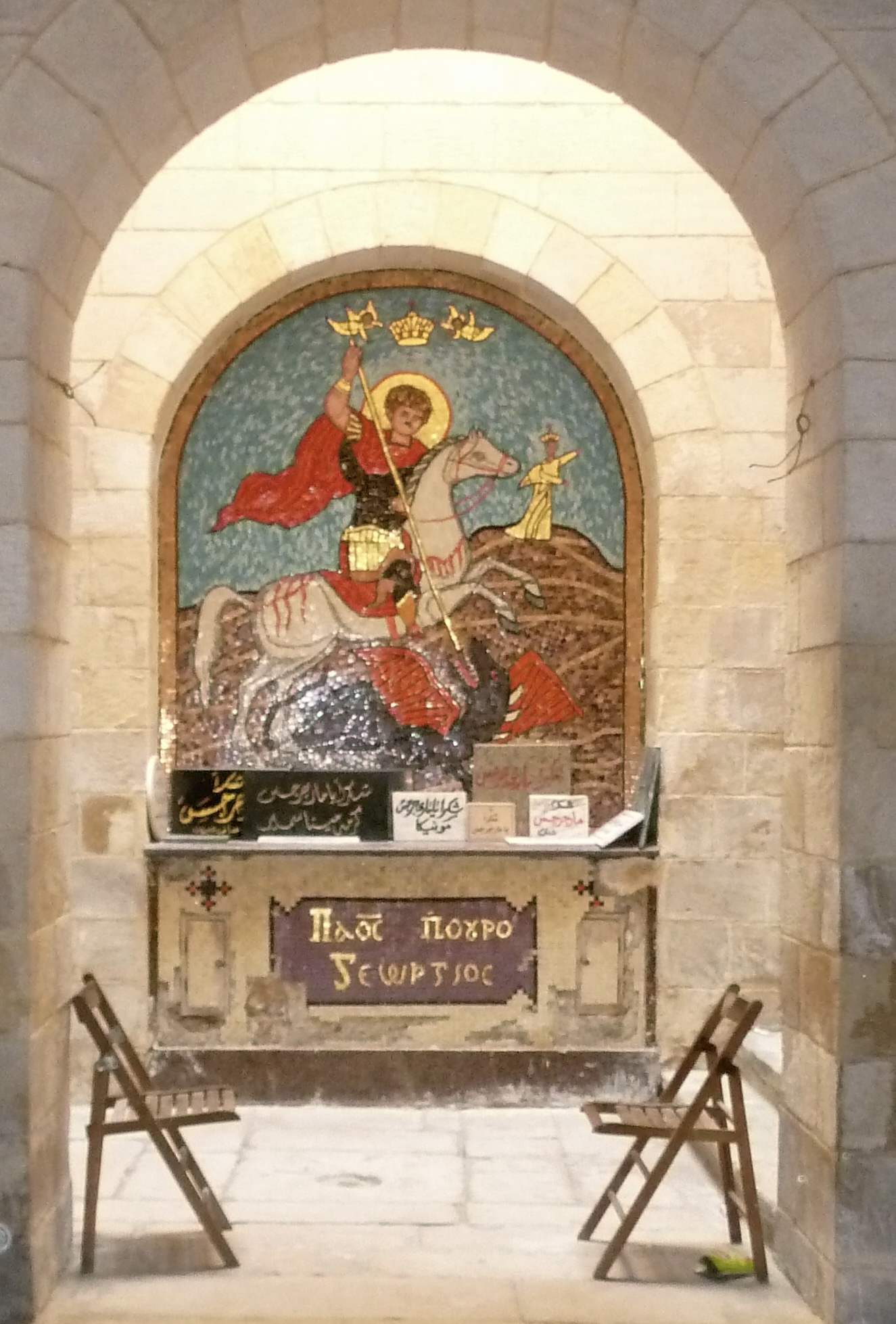
St George
The chains of St George in Old Cairo — the extraordinary energy of the relic and the saint who bridges Christianity and Islam. (8 min read)
The first year I was at the Casa Dom Inacio I was given a holy card with St George on it. This was because it St George’s feast day. Until then i did not know of him as an entity of the Casa.
On my first day in Egypt, on our first outing in Old Cairo, we had an impromptut visit to the Convent of St George. In this highly energised shrine I held in my hands a relic of St George – wow! I also held his chains (more below) and prayed. But I was not well prepared for this visit though it inspired me to learn more about St George. Of course, within the hour, I had magnetised some good information about him.
There is much conjecture about the life of Saint George (c. 275/281 – 23 April 303). According to tradition, he was a Roman soldier from Syria Palaestina. The traditional legends refer to his encounter with a dragon (the symbol of evil), but this should not be taken literally, as the early Christians identified the dragon or ancient serpent as their persecutor. It is interesting to note that on the northern altar screen of the Church of the Holy Virgin al-Mu’allaqa in Old Cairo, 15 icons portray every episode of St George’s life, including his ministry, suffering and martyrdom, yet there is no picture of his victory over the dragon.
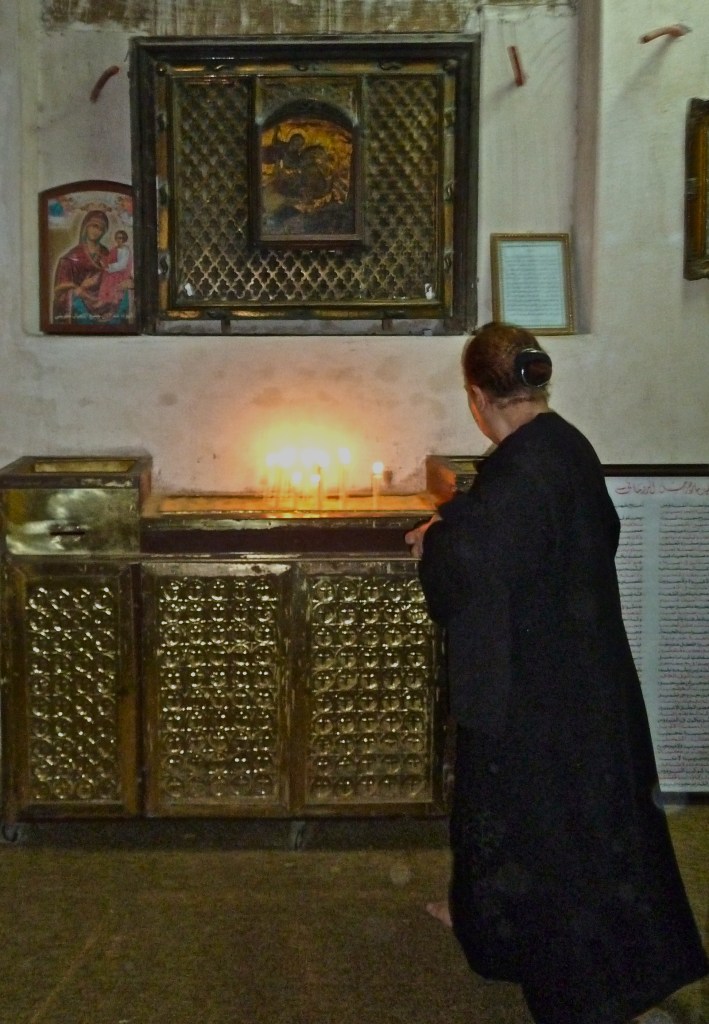
In the Hanging Church, in Old Cairo, there is a relic of St George and several icons. Below the relic is a story about his life:
At the age of 20, following the death of his parents, George presented himself to the Roman Emperor with a request to become a soldier. As his late father had been highly regarded in the military, George was welcomed and rapidly promoted. However, in 303, George publicly renounced an edit from the Emperor that required every Christian soldier to be arrested and every other soldier to offer a sacrifice to the Roman gods of the time. George pronounced himself a Christian and declared his worship of Jesus. The emperor tried, unsuccessfully, to convert George to paganism, even offering gifts of land, money and slaves if he made a sacrifice to the Roman gods.
George was repeatedly tested by the Emperor. By invoking Jesus he worked miracles – he transformed some chairs to fruit bearing trees; he brought the dead back to life from their tombs; and he healed a blind and deaf child by making the sign of the cross over him. Once, the Emperor asked everyone in the town to observe George burning incense for statues. George’s prayers caused the earth to open and swallow the statues and then close up again.
It is said that the Emperor ordered a magician to convert George to the Roman gods. The magician poured a drink for George, put his finger in the cup and recited some magic words. George drank it after making the sign of the cross. As George was unaffected by the drink, the magician converted to Christianity. This incident very much upset the Emperor who decided to squeeze George until his soul had left his body. However, Jesus brought George back to life. When George returned to the city, everyone who saw him believed in him. These 3700 believers were decapitated by order of the Emperor.
It is also said that the Emperor offered George a marriage with his daughter if he rejected Jesus. George initially refused but then accepted the offer. This gave George access to the palace and he was readily able to convert the Empress to Christianity.
The Emperor ultimately ordered George’s execution. Before his execution George gave his wealth to the poor and prepared himself. After various torture sessions, he was executed by decapitation before Nicomedia’s city wall. His body was returned to Lydda in Palestine for burial, where Christians soon came to honour him as a martyr.
During the fourth century, the veneration of St George spread from Palestine through Lebanon to the rest of the Eastern Roman Empire. St George is somewhat of an exception among saints and legends, in that he is known and respected by Muslims, as well as venerated by Christians throughout the Middle East, from Egypt to Asia to the United Kingdom. There are over 350 Coptic churches dedicated to St George.
There are many pilgrimages connected with St George. The largest pilgrimage in Upper Egypt takes place in November in the Monastery of St George west of Dimuqrat and southwest of Armant. Tens of thousands of pilgrims, both Muslim and Christian, assemble in and around the monastery to visit the miraculous icon of St George and to experience its blessings.
In the early 1400s, the relics of St George were moved to the Church of St George in Old Cairo, where they were the cause of many miracles. These were later distributed and there are now over 20 St George reliquaries in the Coptic churches in Cairo (and over 100 in the Orthodox churches of Greece).
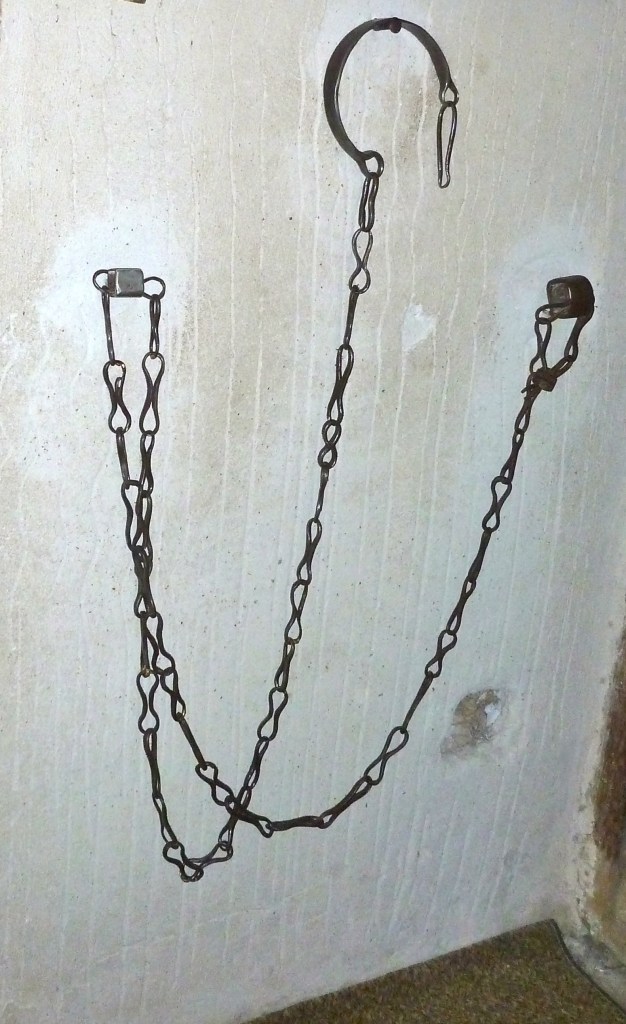
In the Middle East, the chains of St George are believed to possess miraculous powers to cure the demon possessed and paralytics. In the first half of the 19th century, some of the chains of St George were acquired and are now are held in the Monastery of St George. This is how the healing process of the chains was described in 1850: “Near the church was a cell for idiots. Here one could see a chain to which the unfortunate person was tied. In former days it was believed that when the sick person improved, St George would release him without anyone even opening the locks for the chain. The cell has room for only one person”. Today, the chain is accessible to all. Whoever places the halter of the chain around his neck and winds the chain around his body, kissing the chain piously and offering prayers to St George is considered to be in an exceptional state of grace. I put the chains around my next and body on the second visit but didnt feel much grace. This was a huge contrast to the reliquary and the relic itself which is highly energised.
It was a great blessing for me to begin my time in Egypt connecting with another good spirit. The energy of the shine at the convent is strong and beautiful and highly recommended.
Namaste.
© Paul McCarthy & Iluminar.au

